
Marketing for Doctors in Dubai: Build Patient Trust Within the Rules

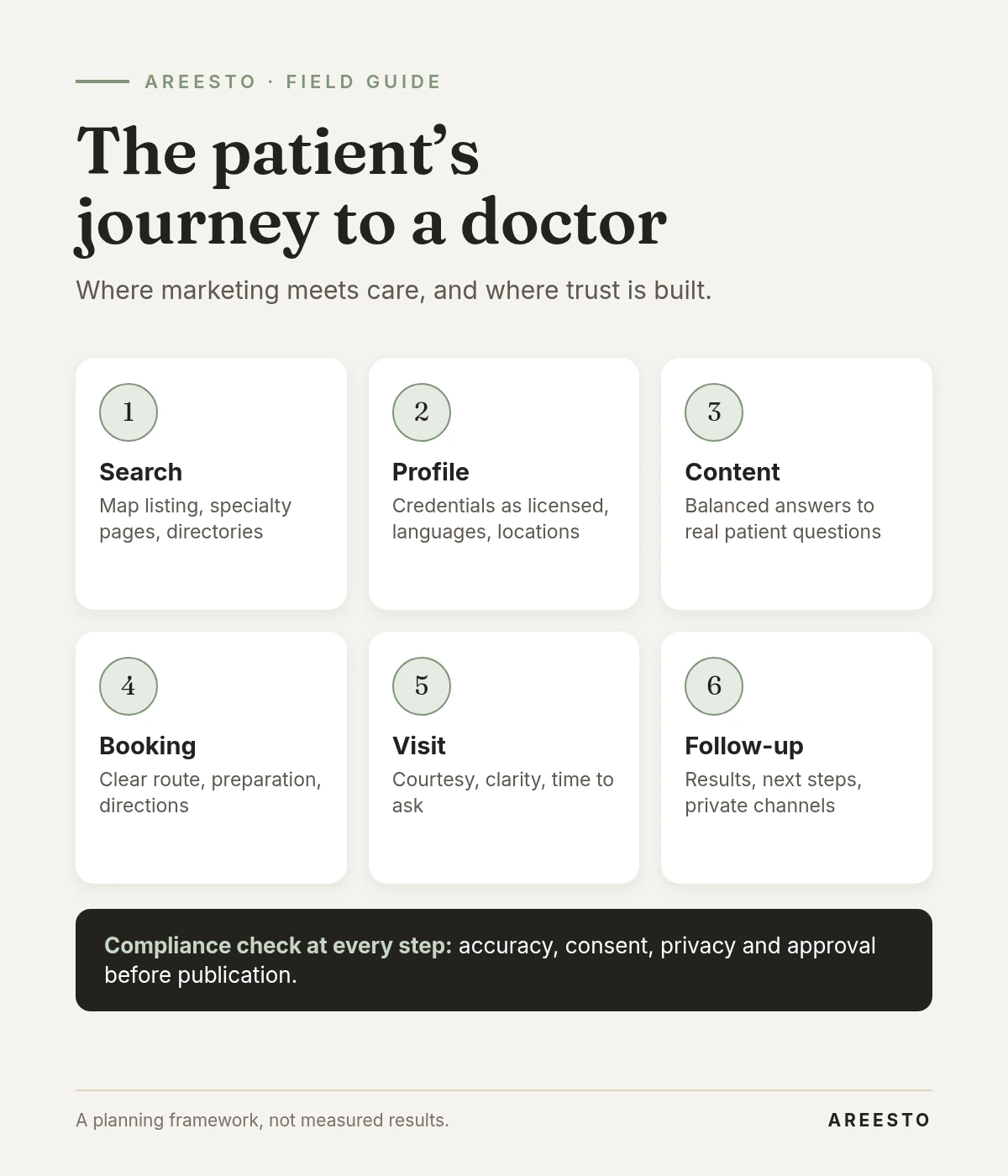
Most patients meet their doctor twice. The first meeting happens online, long before the appointment: a search result, a clinic profile, a short video, a review, a friend’s forwarded WhatsApp message. The second happens in the consultation room. Marketing for doctors in Dubai is about making that first meeting honest, clear and reassuring, so the second one starts with trust rather than doubt.
This guide is for specialists, general practitioners, dentists and clinic teams who want to build a respected professional presence in Dubai. It focuses on what helps patients decide well, and on the compliance habits that keep a doctor’s reputation safe.
Start with the rules, not the reels
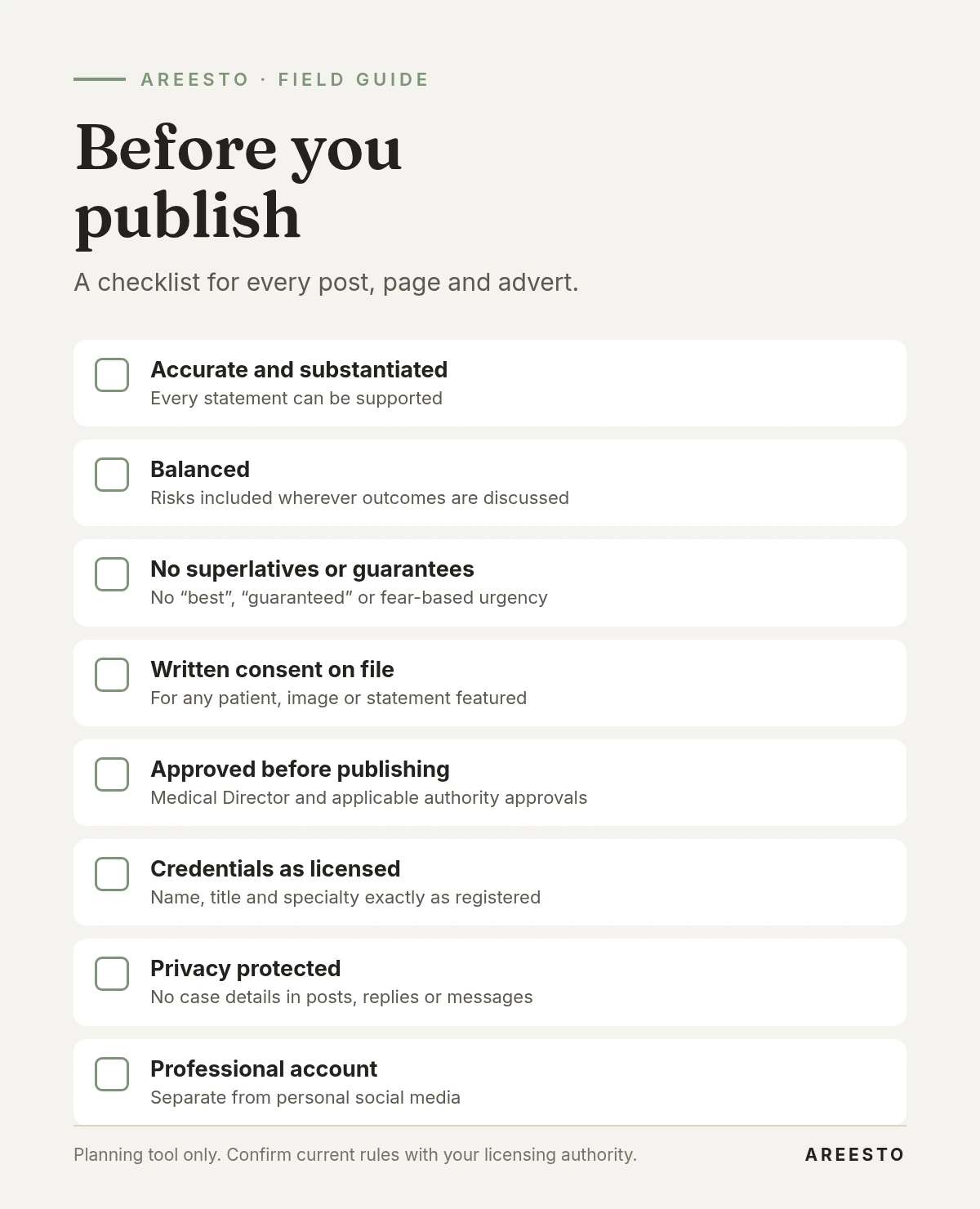
Healthcare advertising in the UAE is regulated, and doctors carry personal professional responsibility for what is published in their name. In Dubai, the Dubai Health Authority has published Standards for Medical Advertisement Content on Social Media for DHA-licensed facilities and professionals. Among other things, the standard expects content to be factually accurate and substantiated, asks for the facility’s Medical Director to approve social media advertising that uses the facility’s name or location, expects risks to be included when outcomes are discussed and lists prohibited content such as guaranteed recovery and patient testimonials without written consent.
Rules are updated, licensing arrangements differ between emirates and free zones, and separate approvals may apply to advertising licences and medical products. Before planning any campaign, confirm the current requirements with your licensing authority, your Medical Director and a qualified adviser. This article is a marketing guide, not legal or regulatory advice.
The good news is that the principles behind the rules are also the principles of good marketing: be accurate, be respectful, do not exaggerate and help people make informed decisions.
Step 1: Define what you want to be known for
Patients rarely search for “a doctor”. They search for a problem, a specialty, a procedure or a location. A clear professional focus helps the right patients find you and helps referring doctors remember you.
Write down, in plain language:
- The conditions or needs you focus on most
- The patients you see most often and the questions they ask first
- The way you approach care, for example how you explain options or involve families
- The languages in which you can consult
- The facility or facilities where patients can see you
Avoid superlatives and claims of superiority. Instead of saying you are the best, show what patients can expect: how consultations work, how you explain options and how follow-up is handled. Our article on brand positioning for healthcare in Dubai explores how to build trust within the rules.
Step 2: Build a complete, accurate doctor profile
A doctor’s profile page is often the most visited page on a clinic website. Treat it as a patient-facing introduction, not a CV dump. A strong profile usually includes:
- Name, title, qualification and specialty presented consistently with your professional licence
- A professional, recent photograph
- A short, warm introduction in the first person or third person, written in plain language
- Areas of focus described in terms patients understand
- Languages spoken
- Where and when patients can book, and how
- What to bring or prepare for a first appointment
Make sure the same details appear on the clinic website, booking platforms, directory listings and Google Business Profile. Inconsistent names, specialties or opening hours are a small detail that creates a big doubt.
Step 3: Answer the questions patients are already asking
The most useful medical content is rarely dramatic. It answers the questions patients ask in consultations, on the phone and in messages: what a first visit involves, how to prepare for a test, what a procedure generally includes, when to seek urgent care and how follow-up works.
Write educational content that helps people understand, while making clear that individual advice requires a consultation. Explain options and limitations with balance, include risks where outcomes are discussed and avoid language designed to create fear or urgency. Our guide on clinic content beyond before-and-after photos shows how to build a content plan around real patient questions.
Formats that tend to work well for doctors include short explainer videos, illustrated FAQs, preparation checklists and articles that answer one question thoroughly. Every piece should be reviewed for accuracy and approved under your facility’s process before it goes live.
Step 4: Make local search work for you
Many patients start with a map search. Make sure your clinic’s listing is complete and accurate, that your name and specialty are presented correctly where the platform allows it and that photos show the real facility. Respond to reviews professionally and without disclosing any patient information, even when a reviewer has shared details themselves.
On your website, create clear pages for your main areas of focus, with descriptive titles and helpful content. Technical basics such as fast loading on mobile, clear navigation and easy booking matter as much as the words. Our local SEO service in Dubai covers these foundations.
Step 5: Use social media with professional boundaries
Social media can help patients get to know a doctor’s approach and personality before booking. It also blurs the line between personal and professional life. The DHA standard expects healthcare professionals to keep separate professional and personal accounts and to avoid interacting with patients through personal social media.
Practical habits help:
- Keep a dedicated professional account and a content calendar planned in advance
- Agree an approval workflow with your Medical Director before anything is published
- Obtain and record written consent before featuring any patient, image or statement
- Never discuss an individual patient’s case in comments or messages
- Move medical questions to the proper booking or consultation channel
- Be cautious with influencer collaborations and check the approvals that apply before agreeing to one
Step 6: Earn reputation, do not manufacture it
Reputation for a doctor is built through outcomes, communication and respect, and it is easily damaged by anything that looks staged. Encourage genuine reviews through normal follow-up processes where the platform permits, respond calmly to criticism and treat complaints as feedback for the patient experience. Do not offer incentives for reviews and do not publish testimonials without proper written consent.
Referral relationships with other doctors also matter. A clear, concise summary of what you do and how to refer, shared with colleagues, can be as valuable as any public campaign.
Step 7: Design the experience around the patient
Marketing makes a promise; the clinic keeps it. Look at the full journey: how quickly the phone or WhatsApp is answered, how clear the directions and parking information are, how long the wait feels, how results are communicated and how follow-up is arranged. Small improvements in clarity and courtesy often have a bigger effect on reputation than new advertising.
Step 8: Plan paid advertising with extra care
Paid search and social advertising can put a doctor in front of patients at the moment they are looking for help. They also multiply any mistake in wording. Before a campaign starts, confirm which advertising approvals apply, keep claims factual and balanced, and make sure the landing page says exactly what the advert promises. A patient who clicks an advert about a specific consultation should land on a page about that consultation, with clear information on who provides it, where and how to book.
Platforms also have their own healthcare advertising policies, which can restrict targeting and wording. Review those as well, and keep a record of approvals for each version of an advert. Measure campaigns by the quality of enquiries and appointments that follow, not only by clicks, and pause anything that attracts the wrong expectations.
Marketing mistakes doctors should avoid
- Superlatives and guarantees. Words like “best”, “guaranteed” or “no risk” can mislead patients and conflict with advertising standards.
- Before-and-after images without the right safeguards. Check the current consent, disclaimer and presentation requirements before using any.
- Fear-based messaging. Urgency and anxiety are not acceptable sales tools in healthcare.
- Inconsistent credentials. Present your title and specialty exactly as licensed, everywhere.
- Treating social media as personal space. Keep professional and personal accounts separate.
- Publishing first, approving later. Approval needs to happen before publication.
How Areesto supports doctors and clinics
We help doctors and healthcare teams build clear positioning, patient-friendly profiles, educational content and local visibility, with a review workflow that leaves final medical and regulatory approval where it belongs: with the licensed professionals and their facility. Explore our healthcare marketing agency services in Dubai and our clinic and dental marketing in Dubai for practice-level support.
Frequently asked questions
Can doctors in Dubai advertise on social media?
Yes, within the rules. DHA has published standards for medical advertising content on social media, and other approvals may apply. Check current requirements with your licensing authority and Medical Director before publishing.
What should a doctor’s profile page include?
Name, title, qualification and specialty consistent with your licence, a professional photo, a plain-language introduction, areas of focus, languages, locations and clear booking information.
Can I share patient reviews and testimonials?
Only in ways that comply with current rules. DHA’s social media standard lists testimonials without written patient consent as prohibited. Always protect patient privacy, including when replying to public reviews.
What type of content works best for doctors?
Educational content that answers real patient questions with balance and accuracy, such as preparation guides, explainer videos and FAQs, usually builds more trust than promotional posts.