
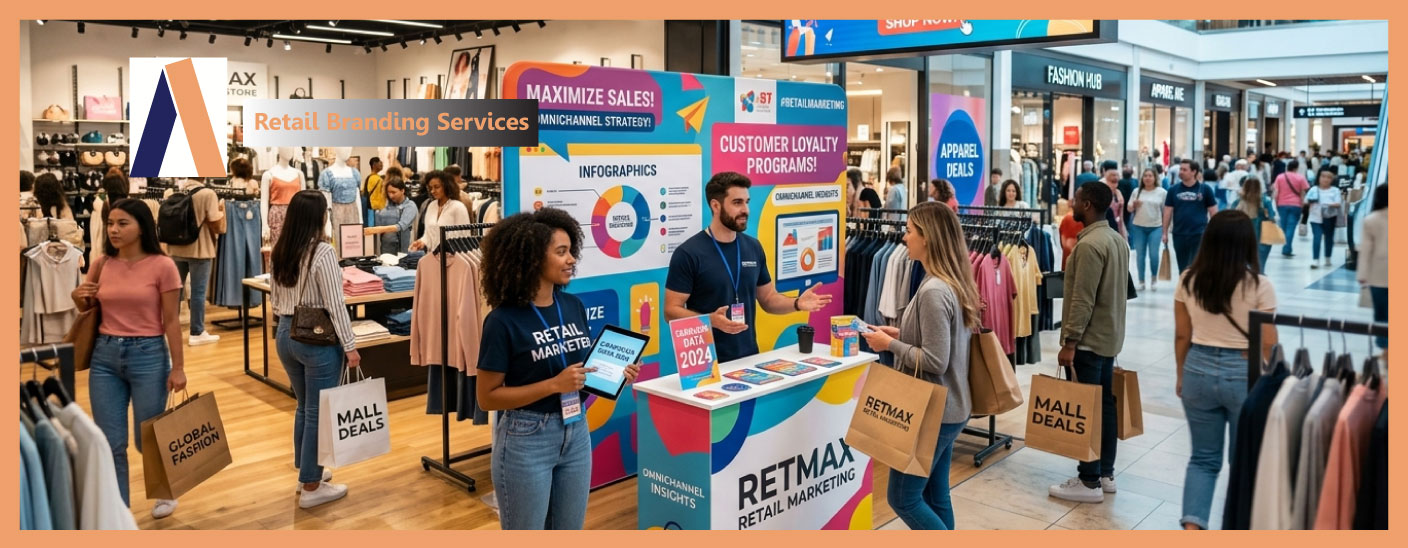
Dubai is no longer just a “shopping destination”; it is a global laboratory for the future of retail. As of 2024, the UAE retail market is valued at approximately $44.38 billion, with a projected surge to $61.89 billion by 2030. In this hyper-competitive landscape, branding is the only differentiator that survives the “Dubai standard” of luxury.
This guide explores how brands are built, positioned, and experienced in Dubai’s unique 2024-2026 ecosystem, from the “20-minute city” urban planning to the rise of AI-driven hyper-personalization.
 Part I: The Branding Lifecycle in Dubai
Branding in Dubai requires a blend of local cultural nuance and global “prestige” standards. The following sequence defines the modern Dubai retail launch strategy.
Areesto Dubai branding Agency provides best branding services for retail branding in Dubai with fallowing steps:
1. Initial Research & Market Intelligence
In 2024, research has moved beyond basic demographics. Brands now focus on:
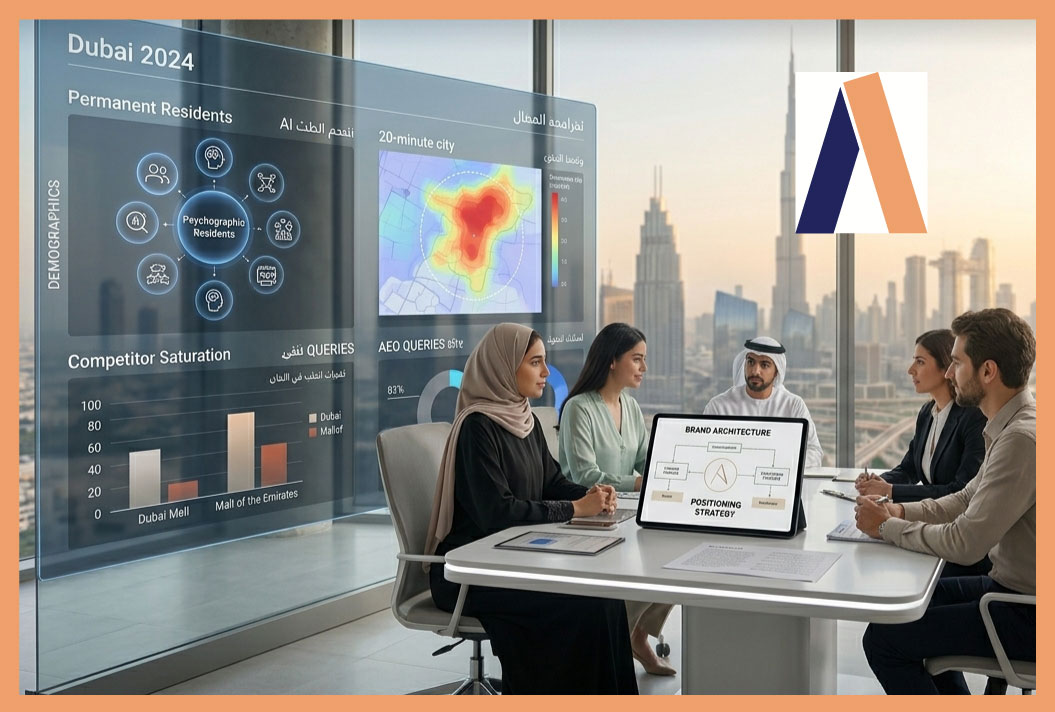
- Psychographics of the “Permanent Resident”: With new long-term visa regulations, Dubai’s population is shifting from transient expats to permanent residents. Research now prioritizes home-centric and family-stability values.
- AEO (Answer Engine Optimization): Researching how customers ask questions to AI assistants (like Alexa or Gemini) rather than just typing keywords.
- Competitor Saturation: Mapping the “Global Presence” factor—identifying which international giants are already in-situ at Dubai Mall or Mall of the Emirates and finding the “white space” they’ve missed.
2. Concept Creation & Brand Strategy
The strategy must solve for “Inconsistent Messaging.” In Dubai’s crowded market, a brand needs a “soul”—what industry experts call Authenticity Over Hype.
- Brand Architecture: Deciding if the brand is a “House of Brands” (like Al Tayer Insignia) or a “Branded House.”
- Positioning: Is the brand “Affordable Luxury” (competing with the likes of Zara) or “Ultra-Niche” (competing with bespoke boutiques in the Dubai Design District)?
 3. Visual Identity & Brand Guidelines in Branding Services
In the UAE, visual identity is semiotic.
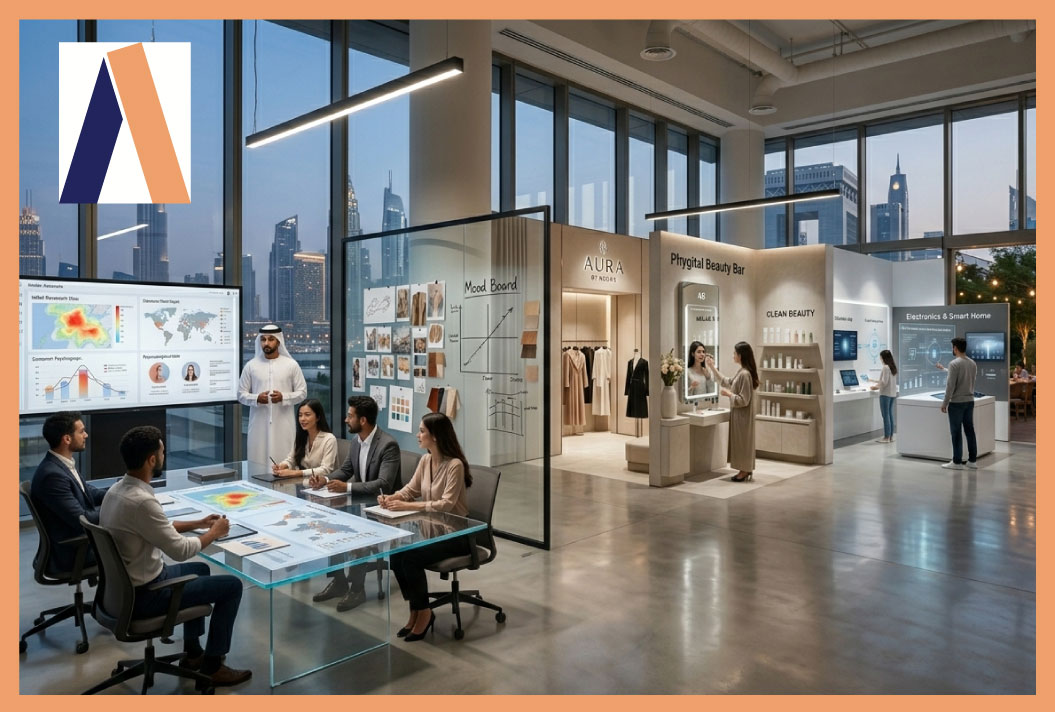
- Color Palettes: Moving away from “Gold and Marble” clichés toward sustainable “Earth Tones” and “Eco-minimalism,” reflecting the UAE’s Green Agenda.
- Bilingual Typography: Typography must be designed with Arabic-first or simultaneous Arabic-English hierarchy to ensure cultural resonance and legal compliance.
Part II: Retail Type Deep-Dives
Different retail sectors in Dubai require vastly different branding “languages.”
1. Luxury Fashion & Haute Couture
Dubai is the epicenter of the “Eastern Shift” in luxury.
- Branding Activity: Focus on Exclusivity and Scarcity.
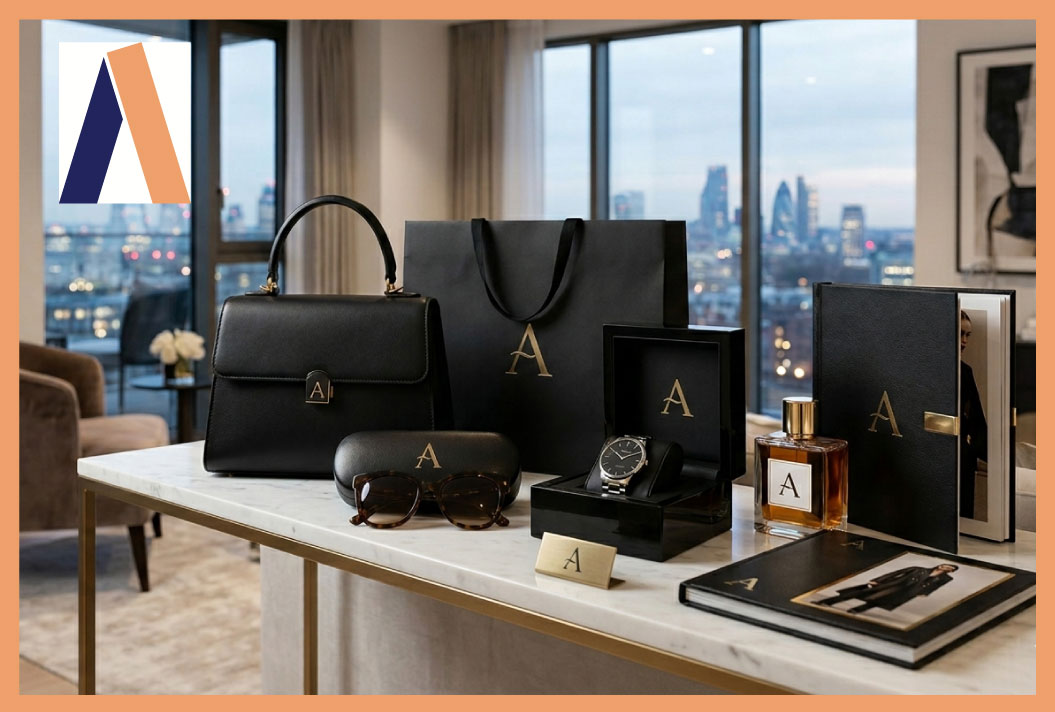
- 2024 Trend: “Quiet Luxury.” Branding is becoming less logocentric and more focused on material quality and heritage storytelling.
- Customer Experience: High-Net-Worth Individuals (HNWIs) expect “VIC” (Very Important Customer) suites and private viewing rooms that are digitally integrated.
2. Beauty & Wellness
This sector is driven by the “Ethical Consumer” trend of 2026.
- Branding Activity: Transparency. Brands must prove their supply chain ethics and “Halal-friendly” or “Clean” formulations.
- Customer Experience: Virtual try-ons (AR) and AI-driven skin analysis are now standard in Dubai’s premium malls.
3. Electronics & Smart Home
As the Dubai 2040 Urban Master Plan turns the city into a “Smart Hub,” electronics retail has shifted.
- Branding Activity: Positioning as a “Solution Provider” rather than a hardware seller.
- Customer Experience: The “Slow Shopping” model—consumers visit showrooms to test smart-home ecosystems and then purchase via “Quick Commerce” for same-day delivery.
 4. F&B (Food & Beverage) Retail
Dubai’s dining scene is the most volatile.
- Branding Activity: Creating “Instagrammable” but “Human” stories. Consumers are wary of staged influencer culture; they want “Human-in-the-loop” authenticity.
- 2024 Focus: Farm-to-table narratives and vertical farming partnerships.
Part III: The 2024–2026 Customer Experience (CX)
In Dubai, CX is where branding meets reality. The current trend is “Phygital”—the seamless blend of physical and digital.
| Feature | 2020 Standard | 2024-2026 Standard |
| Technology | Gimmicky VR headsets | AI-driven personalization & AR |
| Sustainability | Plastic-free bags | Carbon-neutral supply chains |
| Delivery | 2-3 Day Shipping | “Quick Commerce” (15-60 mins) |
| Loyalty | Points-based cards | Community-driven memberships |
The “20-Minute City” Impact
Under the Dubai 2040 Master Plan, retail is moving from “Destination Malls” to “Community Hubs.” Branding must now pivot to proximity and convenience.
- Local Branding: Brands are creating smaller, boutique versions of their flagship stores in residential urban centers like Dubai Creek Harbour or Dubai Silicon Oasis.
Part IV: Digital Transformation & AI
AI is no longer a buzzword in Dubai retail; it is the infrastructure.
1.Predictive Analytics:Initial Research.
Using AI to forecast trends based on real-time footfall data from “Smart City” sensors.
2.Generative Content:Brand Identity.
Creating hyper-personalized marketing collateral that changes based on the user’s specific cultural background and past purchasing behavior.
3.AI-Driven CX:Customer Experience.
Deploying chatbots that handle 80% of queries but offer a seamless “Human Handoff” for complex luxury consultations.
Part V: Sustainability – The New Brand Requirement
Following COP28 and the UAE’s commitment to “Net Zero 2050,” sustainability is a legal and branding necessity.
- Circular Branding: Retailers like Majid Al Futtaim are leading the “Circular Economy” charge.
- The Eco-Premium: 90% of Dubai customers are now willing to pay more for ethical retailers. If your brand doesn’t have a visible “Green Strategy,” it is already behind.
Summary: Building a Brand for the “Best City to Live In”
To succeed in Dubai’s retail market between 2024 and 2026, a brand must be:
- Culturally Resonant: Respecting the heritage-oriented fabric of Deira while embracing the hyper-commercialism of Downtown.
- Technologically Superior: Integrating AI and AR not as toys, but as tools for efficiency.
- Ethically Grounded: Moving away from “disposable” luxury toward durable, sustainable commitment.
Related services: Marketing solutions by industry