
After the Exhibition: Turn Dubai Event Contacts Into a Follow-Up Plan
Imagine unpacking after an exhibition. The badge is in a drawer, the inbox is full and the most promising conversation is already becoming difficult to reconstruct. A follow-up plan should preserve the context while it is still useful—not turn every scanned badge into the same sales message.
Turn exhibition contacts into a practical plan by recording the conversation, confirming the permitted next step and assigning an owner. Review genuine progression rather than treating contact volume as pipeline.
Exhibition networking in Dubai is not the same as collecting badges in a crowded aisle. At venues such as Dubai World Trade Centre and Dubai Exhibition Centre, a useful introduction still needs a clear reason to continue. Preparation before the event and accountable follow-up afterward belong in the same plan.
This guide covers practical exhibition networking in Dubai: what to do before the halls open, how to work the floor and how to turn relevant conversations into appropriate follow-up. It is written for exhibitors and visitors who want a usable commercial process rather than an unstructured contact list.
Why exhibition networking in Dubai is different
A Dubai exhibition can bring together buyers, suppliers, distributors and other professional visitors from different markets. Do not assume everyone you meet is a buyer or is based locally. Ask about their role, their reason for attending and the question a further discussion could resolve.
Relationship culture still matters. A rushed pitch can close a door. A clear, respectful conversation can open a second meeting the same week. Good B2B marketing supports both: a sharp story on the stand, and a follow-up system after the show.
Before the show: book the diary, not the aisle
Do not wait until you reach the registration desk. Where appropriate, use the official event tools, professional networks and legitimate introductions to arrange relevant discussions. Cluster meetings sensibly by venue area and leave room for useful unplanned conversations.
- Write a concise introduction that names the problem you solve, not your full product list.
- Update LinkedIn with a current photo, role and a one-line offer.
- Prepare one-pagers for the relevant buyer types, not one generic brochure.
- Agree internally who qualifies a lead during the opening conversation.
If you are exhibiting, brief the stand team on who you most want to meet. If you are visiting, shortlist relevant stands and accept that a useful conversation may be more valuable than covering every aisle.
On the floor: qualify fast, then go deep
Busy halls can make detailed conversations difficult. Ask whether the current moment suits the other person. Where needed, agree a quieter follow-up rather than forcing an important discussion into an unsuitable setting.
Ask four questions early:
- Which market are they buying or selling into?
- Are they deciding now, or only mapping suppliers?
- Who else signs off?
- What would make a next meeting useful?
If the answers suggest little fit, close courteously rather than manufacturing urgency. If there is a relevant need, agree what would make a next conversation useful. Record essential context promptly in the approved system; do not record someone’s voice without an appropriate permission process.
Off the floor: use Dubai time well
Exhibition networking can continue beyond the floor through appropriate side events or separately agreed meetings. Keep these selective and relevant. A quieter setting is useful only if both parties want to continue the conversation.
Be on time, follow the event’s practical expectations and lead with interest in the other person’s business. Avoid hard-selling before you understand whether your offer is relevant.
After the show: follow up with context and a clear owner
Follow up promptly enough that the conversation remains recognisable, taking account of the next step you agreed. Reference a specific point from the discussion and provide the promised information. Do not send a generic deck simply because the contact appears in the event list.
Use the contact’s context and preferences to choose the next action rather than placing everyone into a fixed automated sequence. B2B marketing should connect event activity to a useful sales process, not multiply uninvited reminders.
If you also need a stronger stand story, look at how brands use events such as DUPHAT 2026 as a pipeline channel, not only a display.
Capture context, permission and the promised next step
Build the contact record around the actual conversation: event context, business relevance, question raised, information promised and the preferred next step. Distinguish what the person said from the stand team’s inference. “Asked about implementation” is different from “ready to purchase”.
A badge scan or exchanged business card is not a universal permission slip for every future campaign. Record the contact preferences and purpose discussed, use the organisation’s approved data-handling process and check applicable requirements with the responsible team. This is practical workflow advice, not a legal determination of a particular contact’s status.
| Record | What belongs here | Why it matters |
|---|---|---|
| Conversation context | Relevant problem and discussion point | Prevents a generic introduction |
| Next-step basis | What was requested or agreed | Separates interest from assumption |
| Owner and action | Responsible team and specific task | Prevents orphaned contacts |
| Stage and review | Current status and reason to revisit | Supports honest progression reporting |
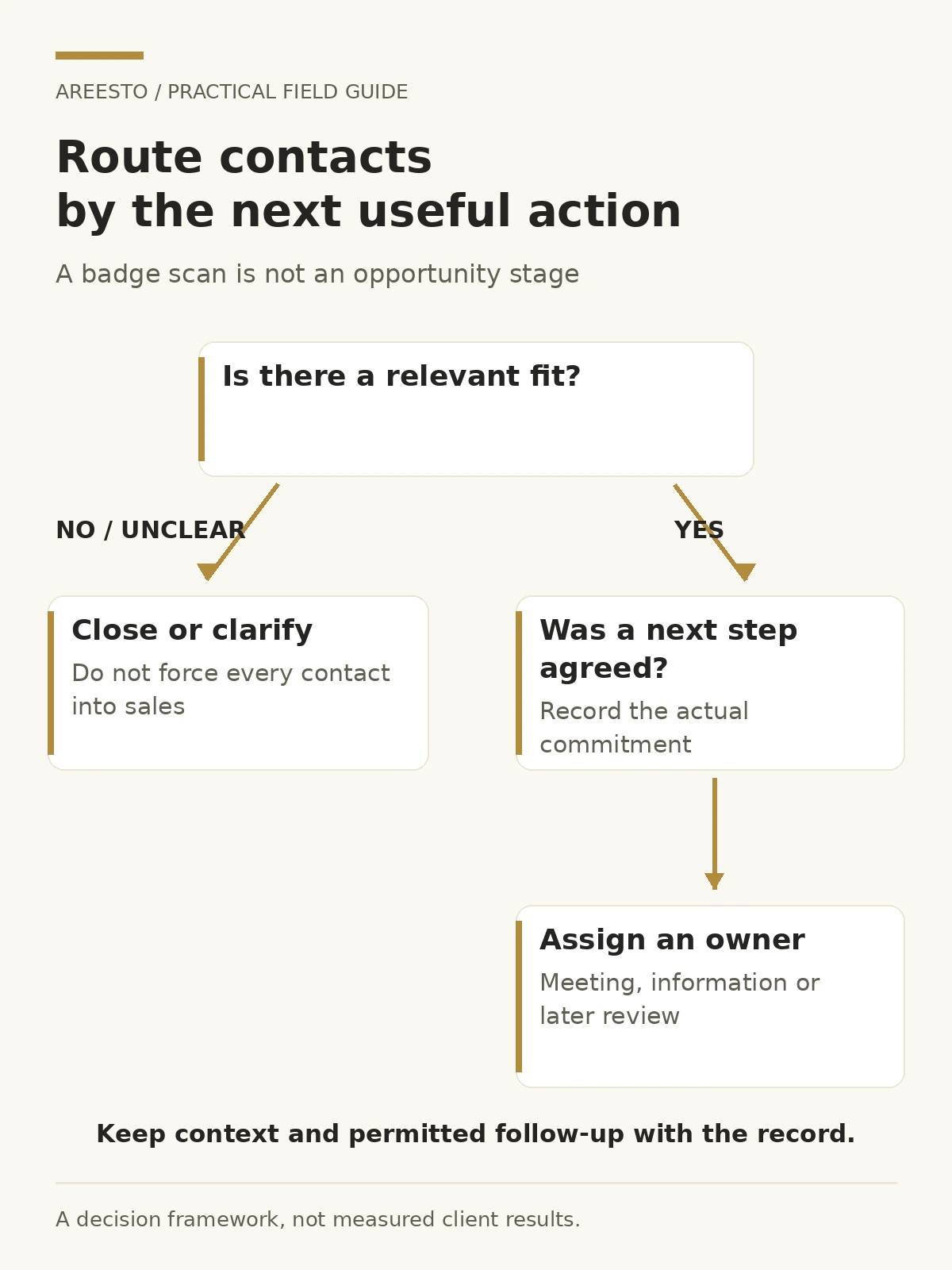
Route by fit and readiness, not enthusiasm alone
Separate a relevant buyer with an agreed next step from a partner introduction, a supplier enquiry and an unclear contact. These may all be valuable relationships, but they do not belong in an identical sales queue. Where fit is uncertain, assign a clarification task rather than inventing an opportunity value.
Keep stages defined consistently with the CRM. HubSpot’s lifecycle-stage documentation is one product example of distinguishing stages; its defaults are not a universal qualification standard. Your business should agree what evidence is required before a contact becomes a qualified opportunity.
Give each actionable record an owner who can actually answer the question raised. If another colleague will follow up, transfer the context as well as the contact details. An unexplained introduction from a different team can make a warm conversation feel like an unsolicited pitch.
Write the follow-up around the conversation
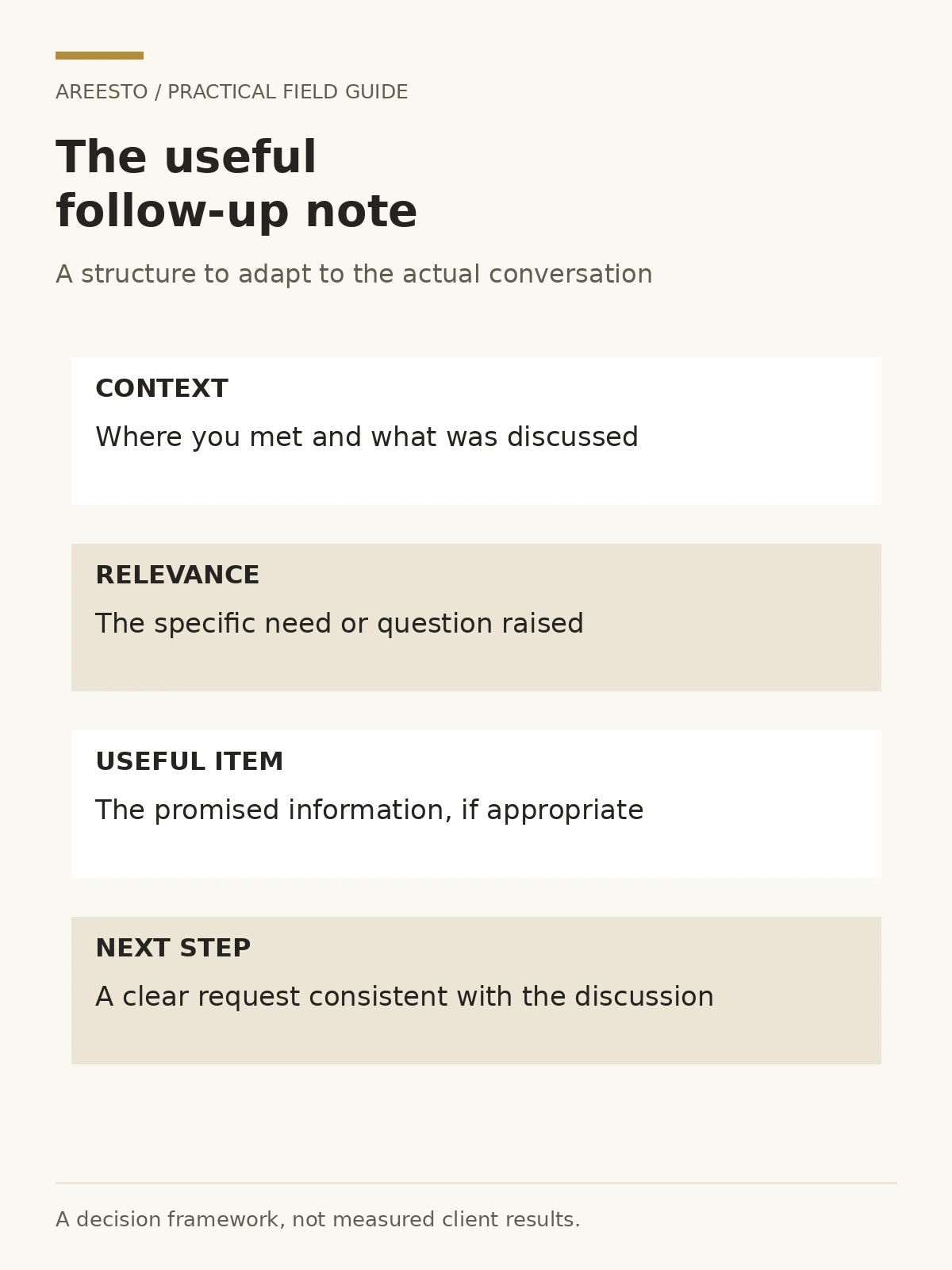
Use a simple structure: where you met, the relevant issue discussed, the promised useful item and a clear next step. Keep the wording accurate. Do not write “as agreed” when no commitment was made, imply a shared project that does not exist or attach confidential material to make the message appear more substantial.
A writing scaffold might read: “At [event/context], we discussed [specific issue]. You asked about [question]. Here is [appropriate information]. Would [relevant next step] be useful?” Replace the placeholders only with real context and adapt the request to the person’s preferences. It is a draft structure, not an instruction to send.
Review progression, not just contact collection
Review whether promised actions were completed, relevant discussions occurred and credible opportunities developed. Keep the timing visible: a conversation at an event and a later commercial decision may fall in different reporting periods. Do not attribute an existing customer relationship entirely to the most recent badge scan.
Record why contacts did not progress. Poor fit suggests a targeting or event-selection question; missing notes or unassigned ownership suggests a process failure. These need different remedies. Use the review to improve the next event brief instead of announcing success from the size of the contact export.
A simple checklist for the next Dubai exhibition
- Meetings booked before travel
- One sentence that a buyer can repeat
- Notes captured after every useful talk
- Relevant follow-up completed as agreed
- A named owner for every hot lead
For a coordinated stand story, contact handoff and follow-up process, discuss B2B marketing in Dubai with Areesto. Start with the audience you want to meet and the decision the event should support, without assuming the show will produce a guaranteed pipeline result.
Related service: Event marketing
Frequently asked questions
Is every badge scan a sales lead?
No. Establish relevance, the conversation context and an appropriate next action before assigning a sales stage.
How quickly should an exhibition contact be followed up?
Follow the timing and next step agreed in the conversation, while the context remains useful. A universal automated schedule is not a substitute for relevance.
Should all event contacts receive the same deck?
No. Provide the information relevant to their question, with appropriate permissions. A generic attachment can ignore the reason they spoke to you.
What should an event review measure?
Track completed commitments, meaningful meetings and properly defined opportunities, alongside costs and limitations. Contact volume alone is not pipeline.