
AI Beyond the Hype: Practical Generative AI Tools Driving Higher Marketing ROI in the UAE
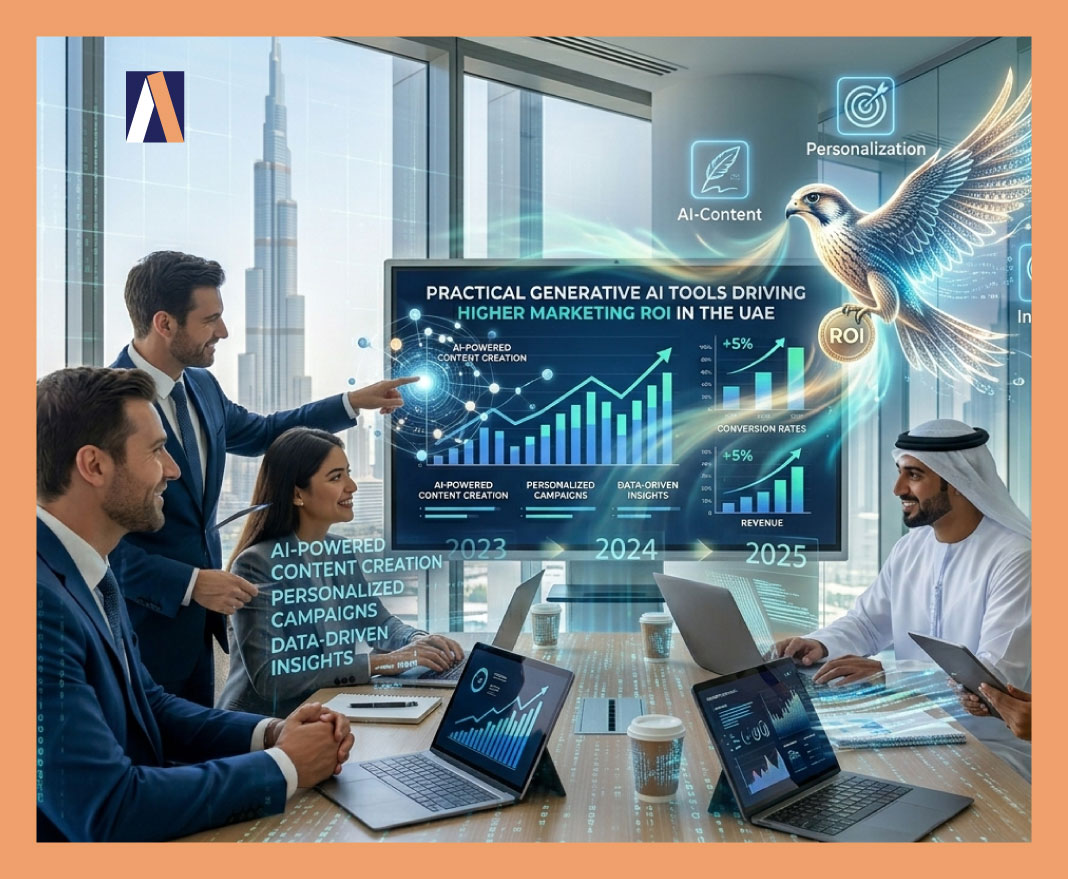
AI Beyond the Hype: Practical Generative AI Tools Driving Higher Marketing ROI in the UAE
The era of speculative artificial intelligence is officially over. In the UAE’s hyper-competitive commercial landscape, the conversation has fundamentally shifted from a ground-up, experimental curiosity to a disciplined, top-down mandate for measurable economic value. Driven by the ambitious goals of the Dubai Economic Agenda (D33) and supported by monumental sovereign infrastructure investments—such as Abu Dhabi’s multi-billion-dollar MGX initiative—the regional market has matured rapidly.
As Eefke Post, a Dubai-based partner at McKinsey & Company, noted at the Mobile World Congress, the foundational question for businesses in the region is no longer about who is merely experimenting with technology, but rather “who is creating real, scaled impact with AI”.
For Chief Marketing Officers (CMOs) and brand strategists operating across the UAE’s premium retail, real estate , and digital commerce sectors, this paradigm shift demands an analytical approach to tool deployment. Moving beyond basic copywriting prompts, the market leaders of today are integrating advanced Agentic AI workflows that connect directly to business performance, lowering customer acquisition costs (CAC) and driving tangible returns on investment (ROI).
The Hard Data: UAE’s AI Infrastructure and ROI Benchmarks
The Middle East, and the UAE in particular, is outpacing global benchmarks in both its readiness for digital transformation and its day-to-day adoption of next-generation technologies.
According to PwC’s Middle East Workforce Hopes and Fears Survey, an astonishing 75% of the regional workforce have actively utilized AI tools in their roles over the past year, compared to a lower global average of 69%. Furthermore, 32% of professionals in the region engage with Generative AI daily. This is not just casual usage; approximately 80% of these users report significant boosts in their productivity, while over 84% cite a noticeable upgrade in their creative capabilities.
[DAILY GENAI USAGE BENCHMARK]
┌──────────────────────────────────────────────┐
│ Middle East: 32% │
├──────────────────────────────────────────────┤
│ Global Average: 28% │
└──────────────────────────────────────────────┘
When it comes to financial verification, the empirical data supports this aggressive integration. Global research conducted by Omdia and Snowflake reveals a 20% year-over-year increase in the quantified ROI of Generative AI.
The Financial Realities of Modern AI Implementation
| Key Performance Indicator | Global Survey Metric | Core Business Driver |
| Quantified Financial Return | $1.49 earned for every $1.00 invested | Direct reduction in asset creation time and predictive ad placements. |
| C-Suite ROI Validation | 75% of non-technical executives report positive ROI | Shift from isolated marketing experiments to core domain transformation. |
| Primary Deployment Motivation | 51% Operational Efficiency / 40% Upleveled CX | Automation of complex multi-channel personalization at scale. |
Beyond Text Generation: The Rise of Agentic AI in Marketing for Higher Marketing ROI in the UAE
The true catalyst behind higher marketing performance is the evolution from standalone GenAI software into Agentic AI ecosystems. While standard text and image generators require constant human prompting and linear review, AI agents possess the autonomy to execute multi-step, high-value workflows independently. They can analyze complex datasets, make real-time optimization choices, use external APIs, and continuously adjust marketing campaigns based on changing consumer behaviors.
Data shows that 32% of enterprise organizations already have agentic solutions in production, with senior business leaders projecting up to a 47% increase in returns on agentic investments over the coming year.
“AI’s next chapter is completely about scaling what works. Agentic frameworks allow systems to move past simple content generation into autonomous execution, enabling brands to bridge the gap between initial strategic design and real-time market execution.”
How Marketing Agents Optimize the Performance Funnel
 Autonomous Demand Sensing & Forecasting: Instead of looking at monthly retrospectives, agents process regional market shifts, competitor pricing adjustments, and local trending searches in real time. This allows them to autonomously reallocate ad spend across Google, Meta, and TikTok to capture immediate search demand.
- Hyper-Personalized Customer Experience (CX) Engines: Moving beyond generic segment marketing, agentic systems alter website layouts, digital banners, and product recommendations dynamically for individual users based on their localized browsing histories and aesthetic preferences.
- Cross-Model Creative Optimization: Modern marketing agents do not rely on a single AI framework. They coordinate tasks across multiple model providers—using one model for natural language generation, another for precise visual asset assembly, and a separate, independent model to double-check asset compliance and brand guidelines before pushing campaigns live.
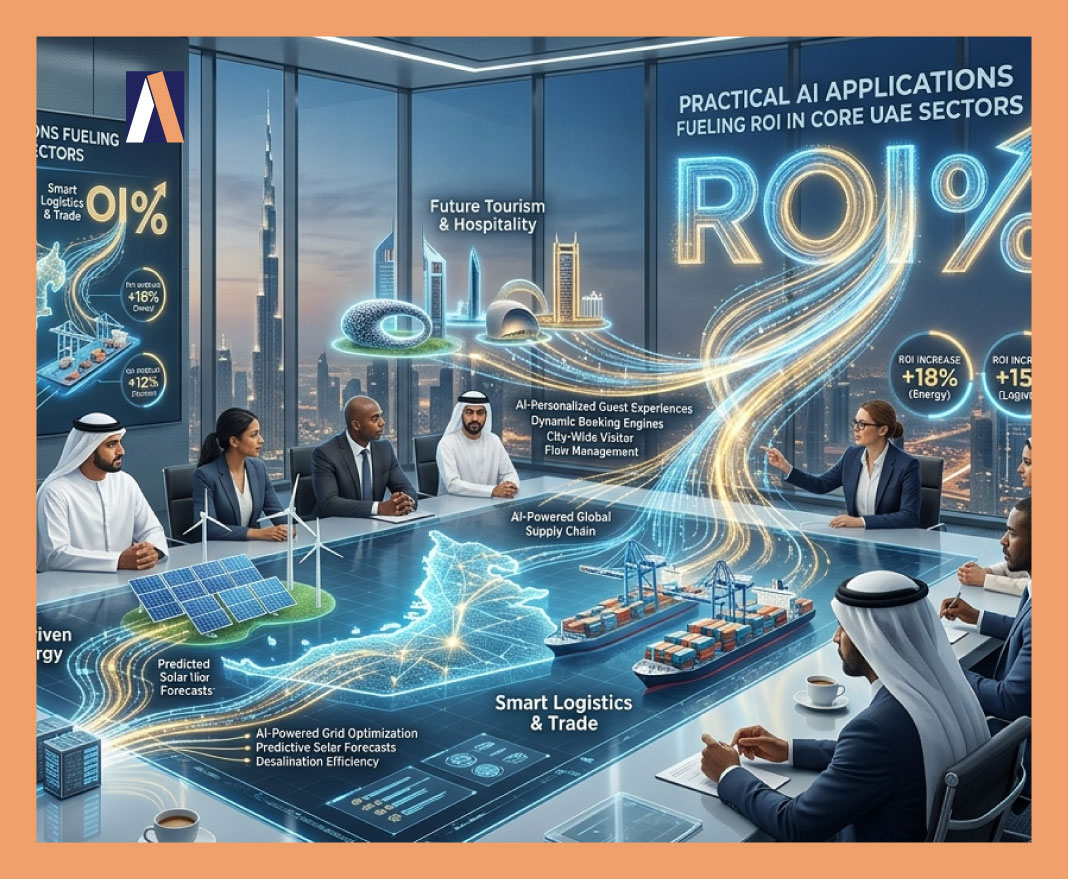
Practical AI Applications Fueling ROI in Core UAE Sectors
To move beyond the theoretical hype, we must examine how practical, highly specialized AI tools are being deployed across the UAE’s high-stakes commercial sectors to generate clear business value:
1. High-End Real Estate and Community Branding
In Dubai’s luxury real estate sector, where off-plan property marketing demands immediate consumer trust and long-distance engagement, traditional static brochures are falling short.
- The Practical AI Solution: Real estate firms are pairing multimodal transformer models with real-time architectural engines to generate interactive, bespoke virtual property tours for overseas investors.
- The ROI Factor: By processing an investor’s regional profiles and design preferences, these tools instantly tailor visual walk-throughs—showing a minimalist aesthetic to one client and a classic contemporary design to another. This level of personalization shortens sales cycles, reduces expensive physical show-apartment construction costs, and increases overseas conversion rates.
2. Premium Omni-Channel Retail and “Phygital” Spaces
With customer acquisition costs on social media rising across the GCC, premium fashion, lifestyle, and beauty brands are focusing heavily on physical retail spaces and experience-led customer retention.
- The Practical AI Solution: Retailers are combining generative design platforms with in-store camera networks running advanced AI video analytics. Generative tools create adaptive, localized marketing displays that change based on data-driven insights regarding crowd movement and foot traffic.
- The ROI Factor: This alignment between physical store experiences and digital inventory systems significantly boosts product discovery, increases conversion metrics inside shopping malls, and scales customer lifetime value (LTV) without requiring additional ad spend.
3. Hyper-Saturated Food & Beverage (F&B) Concepts
 From boutique cloud kitchens to premium experiential dining venues in Downtown Dubai, the hospitality market requires constant creative output to remain relevant.
- The Practical AI Solution: Marketers use specialized multi-model frameworks to run rapid, localized multivariate asset testing. These tools automatically generate, format, and push localized visual ads and seasonal menus across food-delivery aggregators and social channels.
- The ROI Factor: Automating the asset modification process reduces design overhead by up to 60%, allowing internal teams to focus on long-term brand strategy and sensory consumer experiences.
Mitigating Risk: Building a Foundation of AI Trust
As enterprise adoption accelerates throughout the UAE, scaling successfully requires a cautious, highly strategic approach to governance. Deploying autonomous tools without proper safeguards can result in brand dilution, system errors, and severe data vulnerabilities.
According to McKinsey’s State of AI Trust report, 74% of organizations identify output inaccuracy and 72% cite cybersecurity as the primary challenges to scaling advanced AI systems safely.
[TOP BARRIERS TO SCALING AI]
┌──────────────────────────────────────────────┐
│ Inaccuracy & Hallucinations: 74% │
├──────────────────────────────────────────────┤
│ Cybersecurity Risks: 72% │
└──────────────────────────────────────────────┘
Furthermore, Omdia’s research highlights that 40% of organizations struggle with data quality and quantity, while another 31% struggle with legacy system integration. To overcome these operational hurdles and build lasting market advantages, UAE enterprises must transition from fragmented, ground-up adoption toward a centralized, structured framework.
The Operational Strategy for Modern AI Governance
- Establish an Isolated “AI Studio”: Avoid allowing individual departments to buy and deploy siloed AI software haphazardly. Establish a centralized hub that evaluates use cases, maintains reusable technology frameworks, and creates a secure sandbox environment for rigorous testing.
- Implement Strict Cross-Checking Protocols: For higher-risk outward-facing automated campaigns, deploy different models from separate providers to review each other’s work. This provides an autonomous layer of quality assurance that catches hallucinations or biased outputs before they reach the consumer.
- Maintain Defined Human Oversight (“Human-in-the-Loop”): Design marketing workflows where automated agents handle data processing, asset variation, and initial audience targeting, but leave final approvals, strategic vision, and emotional brand guardrails to human professionals.
The Strategic Path Forward
In the UAE’s rapidly expanding economic landscape, treating Generative AI as a simple tool for quick copy or automated imagery is a missed opportunity. The brands realizing a true competitive advantage are those integrating automated tools into their core strategic workflows to transform the entire customer experience.
By building a secure infrastructure rooted in data quality, utilizing autonomous agents for hyper-personalization, and maintaining a strict focus on ROI, business leaders can successfully move beyond the technology’s initial hype. This balanced approach ensures sustainable growth, efficient marketing budgets, and long-term relevance across the Middle East’s most dynamic commercial markets.