
In the GCC’s Experience-Driven Economy, Commercial Buildings Need a Spatial Identity
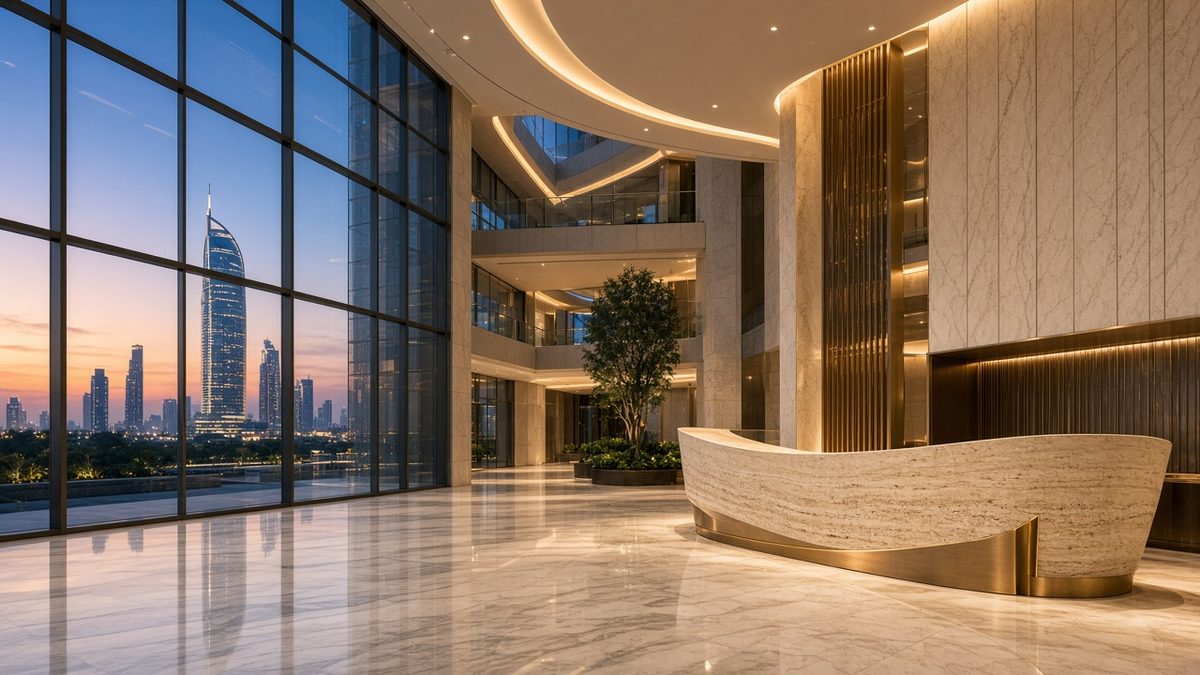
A leasing director in Business Bay walks a prospective tenant through two office towers on the same afternoon. Both have similar floor plates, parking ratios and rents. The first lobby is polished but anonymous: marble, a reception desk, a security gate and a framed logo. The second feels like somewhere: a clear arrival sequence, a lounge where people actually sit, signage that is easy to follow and small details that show someone has thought about the people who will work there every day. The tenant signs for the second.
Commentary in the region this autumn argued that in the GCC’s experience-driven economy, brands need a spatial identity. For commercial real estate marketing in Dubai, that idea is especially practical. A commercial building is a brand that occupiers live inside. This article sits beside why commercial properties should say who they are for and what commercial property websites should do next.

Why the Brochure Is Not the Brand
Commercial property marketing in the UAE has long relied on renders, brochures and a name on the façade. Those still matter, but decision-makers now compare buildings on how they feel to use. Employees expect workplaces that are pleasant to arrive at, easy to navigate and good for meeting people. Retail tenants want podiums that draw footfall and feel coherent. Occupiers judge all of this on the site visit, in minutes.
When the physical experience contradicts the brochure, the brochure loses. A building marketed as a “community” with an empty, echoing lobby; a “premium” retail podium with confusing wayfinding and tired signage. The space either confirms the brand promise or quietly cancels it.
What a spatial identity includes
- An arrival sequence from the road, car park or metro that feels intentional
- Wayfinding and signage that follow one clear visual system in English and Arabic
- Shared spaces designed for real use, such as lounges, terraces and meeting points
- Materials, lighting and scent that express the building’s character consistently
- Digital touchpoints, from visitor registration to tenant apps, that look and sound like the same brand

Designing the Experience Around Occupiers
Start with the people who will use the building. A tech company in Dubai Internet City, a law firm in DIFC and a logistics operator in Dubai South want very different things from a workplace. The spatial identity should express what makes the building right for its intended occupiers, not a generic idea of luxury.
Map the daily journey: arriving by car or metro, getting through security, finding the lift, grabbing a coffee, hosting a client, leaving late. Each moment is a chance to show the building’s personality and to remove friction. Good property brands make that journey easy before they make it beautiful.
Retail podiums and mixed-use schemes
In mixed-use projects, the podium is often the public face of the whole development. A clear identity for the retail and food and beverage level, with events, seating and a curated tenant mix, gives office occupiers and the neighbourhood a reason to stay. It also gives leasing teams a story to tell.

Programming keeps the identity alive
A space only feels alive when it is used. Simple, regular programming, such as a monthly breakfast for tenants, a pop-up from a local café, a wellness morning on the terrace or a small exhibition in the lobby, turns architecture into community. These moments do not need big budgets. They need consistency and a clear link to the building’s character, so occupiers start to feel the identity rather than read about it.
Facility and community teams are part of the brand team here. Their tone at reception, the way they handle visitors and the care they show for shared spaces are what people remember after the leasing tour.
Bringing Spatial Identity Into Marketing
Once the experience is designed, marketing should show it honestly. Film the arrival sequence, photograph the lounges in use, show the wayfinding and the terrace at sunset. Let prospective tenants see what it is like to be there, not only what the building looks like from a drone.
Brokers need the same material. A short, consistent leasing kit with clear photography, floor plans, access information and a one-sentence brand idea helps agents present the building accurately. For developers active across residential and commercial, our real estate marketing work in Dubai shows how one brand architecture can support several asset types.
- Show real spaces and real use, not only renders
- Explain access, parking and transport clearly
- Give brokers a simple, consistent leasing kit
- Keep signage, website and leasing materials in one visual language

Frequently Asked Questions
Is spatial identity only for new buildings?
No. Existing buildings can refresh lobbies, wayfinding, shared spaces and digital touchpoints to create a clearer identity, often at lower cost than a full refurbishment.
How does spatial identity help leasing?
It makes site visits more persuasive and memorable, gives brokers a clearer story and helps occupiers imagine their teams in the space.
Who should be involved in creating it?
Asset managers, leasing teams, architects or interior designers, facility managers and brand specialists, ideally working from one brief.
Make the Building Feel Like Its Brand
In Dubai’s competitive commercial market, the buildings that lease well are not always the newest or the tallest. They are the ones where the experience matches the story. A clear spatial identity turns a property from an address into a place occupiers want to be.
Areesto is a Dubai-based branding and marketing agency working with developers, landlords and asset managers across the UAE and the GCC. To give your commercial property a clearer identity and a stronger leasing story, email office@areesto.com or explore our commercial real estate marketing services in Dubai.