
Your Cars Are the Billboard: Fleet Livery and Airport Presence for Dubai Rent-a-Car Brands
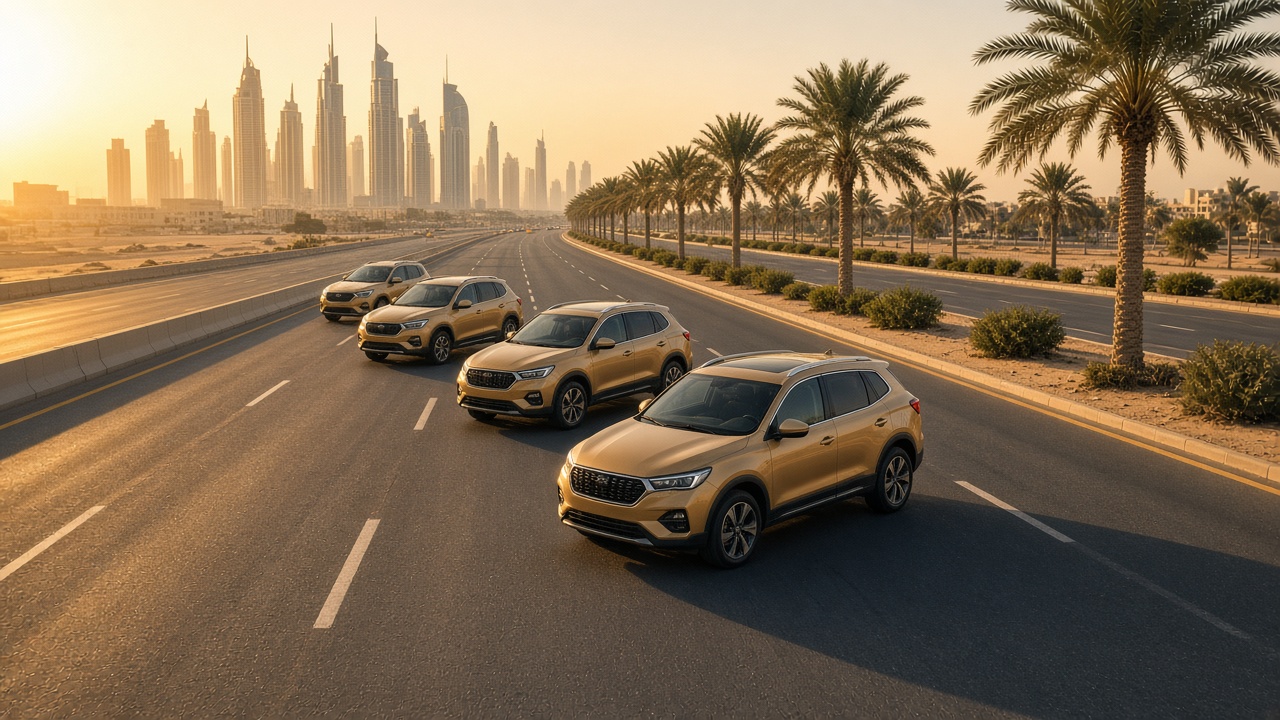
A visitor leaves the terminal, squints into the Dubai heat, and tries to find the name they booked at midnight. At the same hour, rental cars are moving along Sheikh Zayed Road, past marina towers, hotel forecourts and school runs. Some of those cars are invisible. A few are recognisable from two lanes away, not because they are louder, but because they clearly belong to the same company.
For a rent-a-car brand, the fleet is the most public piece of communication you own. Livery, airport presence and the way keys are handed over are not decorations added after a logo is approved. They are the brand, experienced at life size. This is especially true in Dubai, where so much of the customer journey happens between an airport pavement and a driver’s seat.
The ideas below are for operators who want that physical presence to feel considered and consistent. They sit alongside a wider approach to car rental marketing and branding in Dubai.
Treat Livery as a System, Not a Sticker
Fleet livery fails when it is treated as a one-off print job: a large name on the door, a phone number along the sill, and little thought for what happens when the car is dusty, parked at night, or seen at motorway speed. A stronger approach is to design a system. Decide what must be recognisable from a distance, what should be readable when someone walks up to the car, and what should be left quiet so the vehicle still looks well kept.
In practice, that usually means a limited colour accent, a simple mark, and typography that stays legible in Arabic and English. The mark should work on a compact hatchback and on a large SUV without being stretched or crowded. Phone numbers and Instagram handles, if you use them at all, should be secondary. People remember a colour and a shape more reliably than a line of digits they cannot read in traffic.
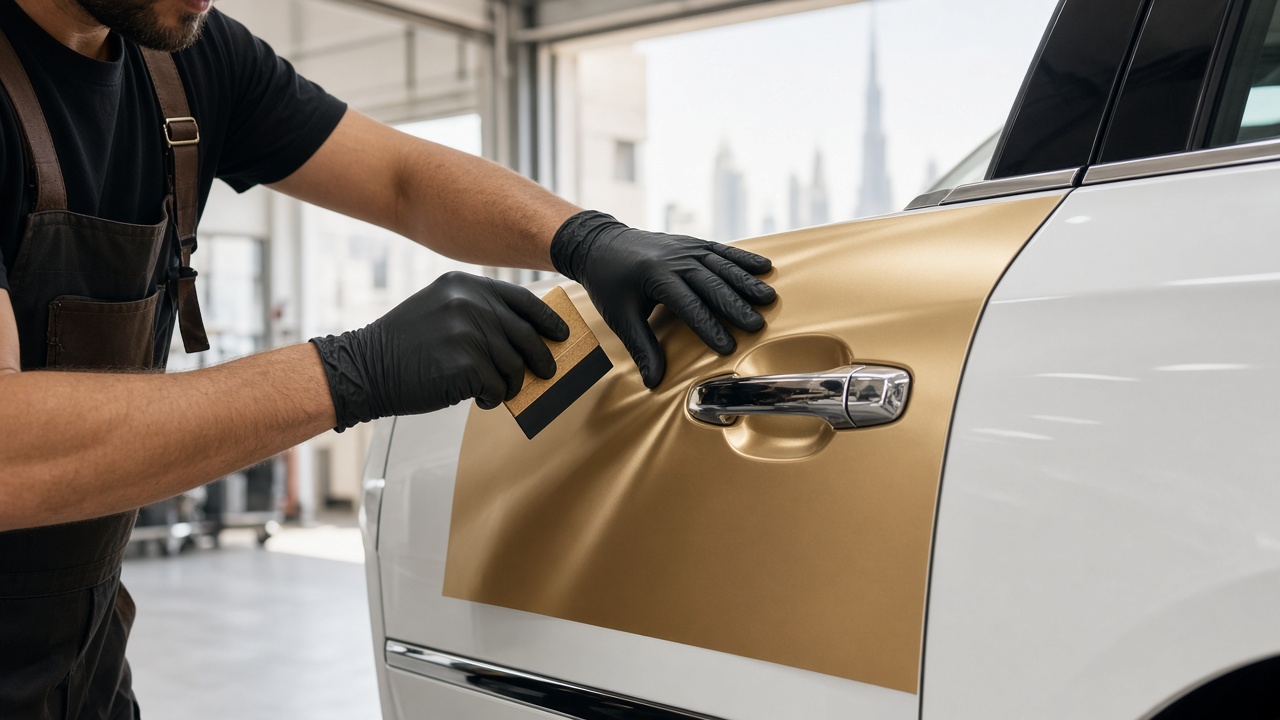
You do not have to wrap every car from bumper to bumper. A full wrap can be striking when the design is disciplined and the film is maintained. It can also age quickly in the sun, advertise damage, and make a mixed fleet look noisy. Many companies are better served by a partial system: door panels, a rear identifier, interior touches and a consistent cabin standard, all drawn from the same identity.
Design for sunlight, dust and speed
Dubai light is hard on both colour and contrast. Test the design in bright sun and at dusk, not only on a studio screen. Avoid delicate thin lines that disappear at a distance, and avoid placing essential information where a door protector, a parking scrape or a dirty sill will hide it. If the livery only looks good on a freshly washed hero car, it is not finished.
Keep Economy Cars and SUVs in the Same Family
A common problem appears when a company grows its fleet. The first cars receive a careful wrap. Later additions arrive with a door magnet, a different typeface, or no marking at all. To the operator, these are temporary gaps. To a customer on the road, or to a tourist trying to identify the shuttle car, the brand looks unplanned.
Build a family of applications instead of one design that only fits a mid-size sedan. Specify what happens on a compact car, a family SUV and a van. Decide which elements are mandatory and which can be simplified. A smaller car may carry only the mark and a colour accent; a larger vehicle may have more room for a wordmark. The relationship between them should still be obvious.
The same discipline applies to unbranded or lightly branded cars, which some companies prefer for customers who do not want to look like they are in a rental. That can be a legitimate part of the offer, especially for monthly and executive rentals. If you choose that route, keep the brand present in the places the customer still sees: the booking confirmation, the key pack, the walkaround, and the way staff are dressed. Quiet on the bodywork should not mean anonymous at the handover.
Airport Presence Is a Brand Moment, Not Only a Logistics Problem
For a large share of visitors, the first physical meeting with your company happens at Dubai International Airport or Al Maktoum International Airport. That meeting is rarely relaxed. People are tired, carrying bags, managing children, and comparing the sign in front of them with a confirmation email on their phone. If the name, colour and typography do not match what they booked, confidence drops immediately.
Think of the arrivals sequence as a designed path. How does the customer know whether you are offering meet-and-greet, a shuttle, or a short walk to a desk? What does the sign look like at arm’s length and from further away? Are staff dressed in a way that is easy to identify without resembling a crowd of other operators? Is there a simple instruction in the pre-arrival message, in both English and Arabic where useful, that matches the scene on the ground?
Small contradictions become large at the airport. A polished website and a handwritten board; a confirmation that says “someone will meet you” and a long unexplained wait; a brand name on the booking and a different trading name on a jacket. None of these require an extravagant desk to fix. They require the same identity, used consistently, and a process that assumes delayed flights and tired people.
After hours are part of the brand
Night arrivals are not an exception in Dubai; they are a normal pattern. The brand has to work when the regular supervisor is not on shift. That means a backup contact that actually answers, a clear meeting point, and staff who have the same information the customer was sent. An elegant livery will not compensate for a missed pickup.

The Handover Is Where the Brand Becomes Believable
Livery gets the customer to the car. The handover decides whether they trust it. This is the moment to make the promise practical: a calm walkaround, a clean cabin that matches the photographs, and a short, clear explanation of fuel, Salik, insurance and the security deposit.
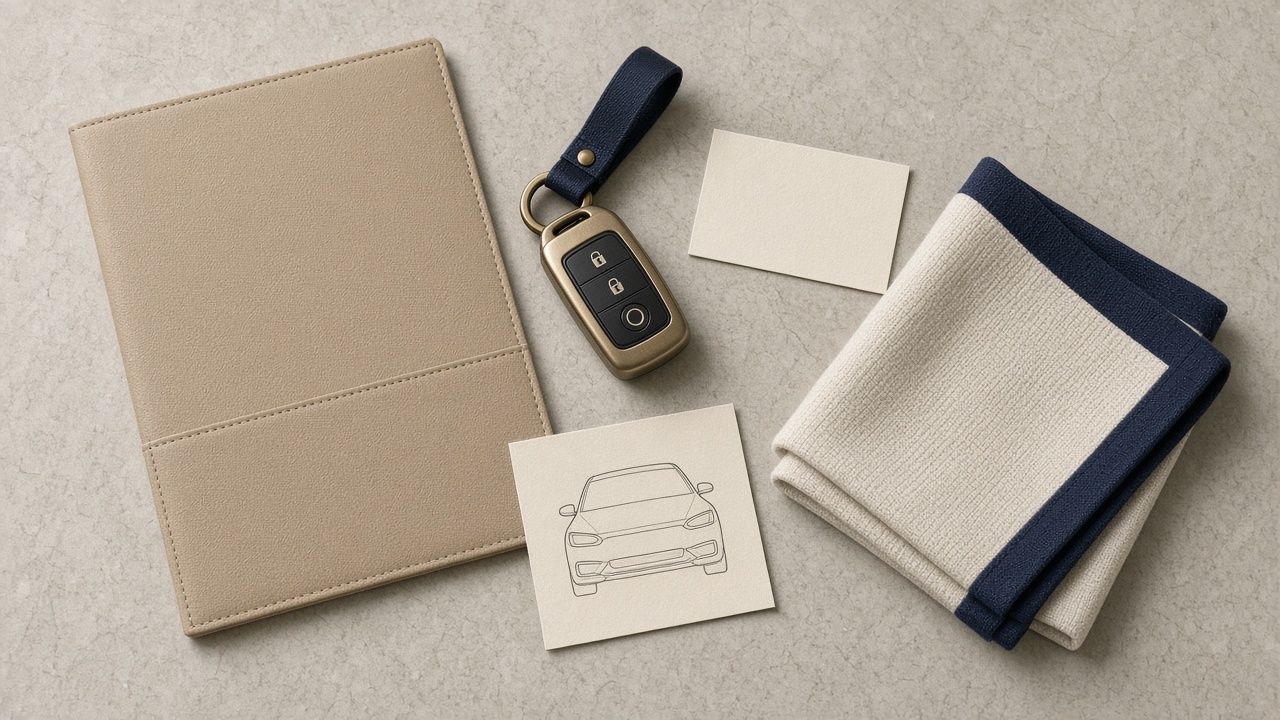
Prepare a handover kit as carefully as you would prepare a hotel check-in. A folder, key card, simple diagram and after-hours contact should look as if they belong to the same company as the car door. Documents should be easy to photograph and easy to find later in a WhatsApp chat. If extras are offered, they should be explained in the same tone as the rest of the brand, not as a last-minute push.
The condition of the car is part of the identity. A beautifully marked vehicle with stains, a missing wheel cover or an unexplained existing scratch tells the customer that the brand is only a surface. Preparation standards are a design decision as much as an operations decision.
Maintenance Is Part of the Design
In this climate, film, ink and adhesives are not permanent. A peeling edge, a faded door magnet or a cracked light box on a depot sign does more harm than a plain, clean car. Build inspection into the same routine that covers servicing and cleaning. If a panel is damaged, remove or repair the graphic rather than leaving a broken brand on the road.
The same rule applies to partner vehicles, replacement cars and temporary additions during peak season. If a substitute does not meet your visual or preparation standard, say so before the customer meets it, and keep the handover as reassuring as possible. Surprise is the enemy of trust.
Frequently Asked Questions
Do all rental cars in Dubai need full wraps?
No. Full wraps can work well for some fleets, but they are not a requirement for strong fleet branding. A simpler, consistent system is often easier to maintain and looks more professional than a worn all-over graphic.
Is airport branding only relevant for tourist rentals?
It matters most for visitors arriving by air, but residents also collect cars at airport locations and city depots. Clear signs, recognisable staff and a calm process help both groups. The airport is simply the most unforgiving version of that test.
What if some customers do not want a branded car?
Then make an unbranded or lightly branded option part of the offer, and keep the brand present in the documents, communication and service. The bodywork can be quiet without the experience becoming generic.
Who should design fleet livery, a wrap shop or a branding team?
Production partners are essential for materials, fit and durability, including printing and production where relevant. The identity itself should be designed as part of the wider brand system, so the cars, the airport sign and the website feel like one company.
Let the City See One Company
Dubai already gives a rental company an unusual amount of exposure: airports, hotels, highways and neighbourhood streets. The opportunity is not to shout from every panel. It is to look like the same careful company in all of those places, and to make the first minutes with the car feel as considered as the identity on the door.
Areesto is a Dubai-based branding and marketing agency. We help car rental companies turn identity into something people can recognise on the road and at the airport. If you would like to review your fleet presence, write to us at office@areesto.com, or learn more about our car rental marketing and branding services and branding services.