
Car Rental Marketing Through Aggregators and GDS: How to Win Bookings on Booking.com and Beyond
Imagine it is late at night in a hotel room in Dubai. A traveller lands tomorrow morning, opens a rental comparison page on a phone and scrolls past a wall of near-identical cars. Same model, similar price, a row of small logos. A decision is made. One rental company gets the booking; other suppliers never even knew they were in the race.
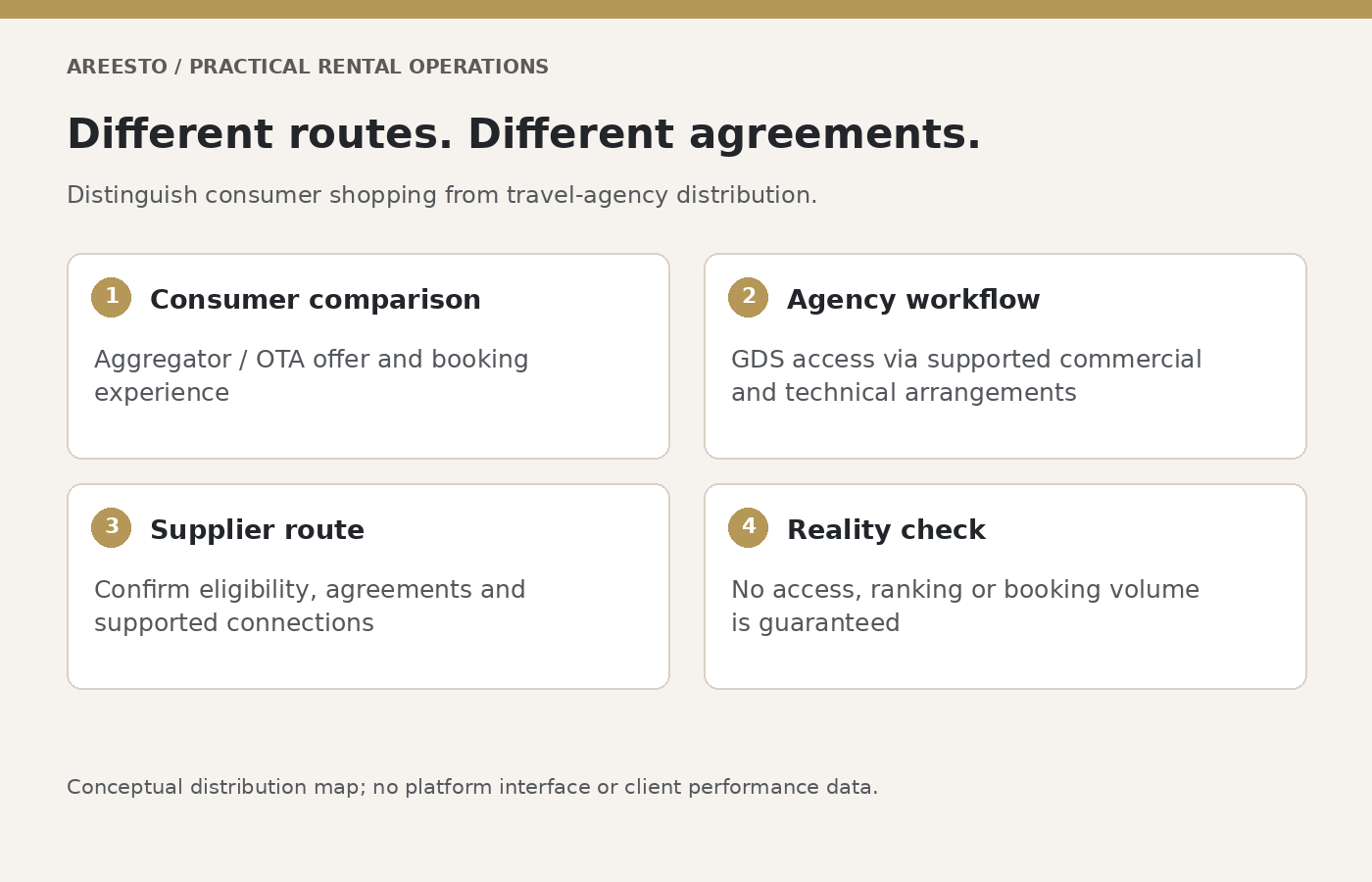
Consumer comparison and travel-agency distribution are different routes to the rental customer. Your counter, your fleet and your service may be excellent, but on these channels you are judged by a thumbnail, a price line, a handful of reviews and the clarity of your terms. This guide explains how to compete well there, and how to use these channels without losing control of your brand.
What Aggregators and GDS Actually Do for a Car Rental Business
Before optimising anything, it helps to be clear about the two kinds of channel.
Aggregators and online travel agencies
Aggregators and online travel agencies (OTAs), such as Booking.com’s car rental service and similar comparison platforms, show customers many suppliers in one search. They bring huge consumer reach, and in exchange they usually take a commission or margin on each booking. The traveller compares; the platform ranks; you compete in the open.
Global distribution systems
A global distribution system (GDS), such as Amadeus, Sabre or Travelport, is a network that connects travel suppliers with travel agents, corporate booking tools and many online platforms. For car rental companies, GDS connectivity is often the route into corporate and agency travel, where bookings are made by professionals rather than by holidaymakers browsing on a phone.
Both channels share one truth: you are rarely the only option on the screen. Marketing here is less about shouting louder and more about being the obvious, trustworthy choice at the exact moment of comparison.
Confirm the Route Before Planning the Campaign
Being bookable on Booking.com is not the same as connecting directly to a GDS. Supplier acceptance, commercial agreements and technical connections depend on the platform and your business. Confirm eligibility, onboarding requirements and the supported integration route before spending on a channel launch. An affiliate programme lets a publisher refer customers; it is not proof that a rental supplier can list its fleet.
Travelport’s official car distribution overview describes agency booking workflows with car content alongside other travel services. That is distinct from a consumer shopping page. Neither connection guarantees placement, bookings or access to every buyer.
Booking.com’s official car-rental integration tutorial describes search, availability, policies and booking steps for approved affiliated partners. That documentation is not a self-service supplier acceptance promise or a GDS contract. Agree the actual supplier/commercial route separately.
Why Your Listing Is Your Shop Window
On your own website you control the story. On an aggregator, your listing is the story. The information provided shapes what a customer can understand and compare.
Car photos and categories
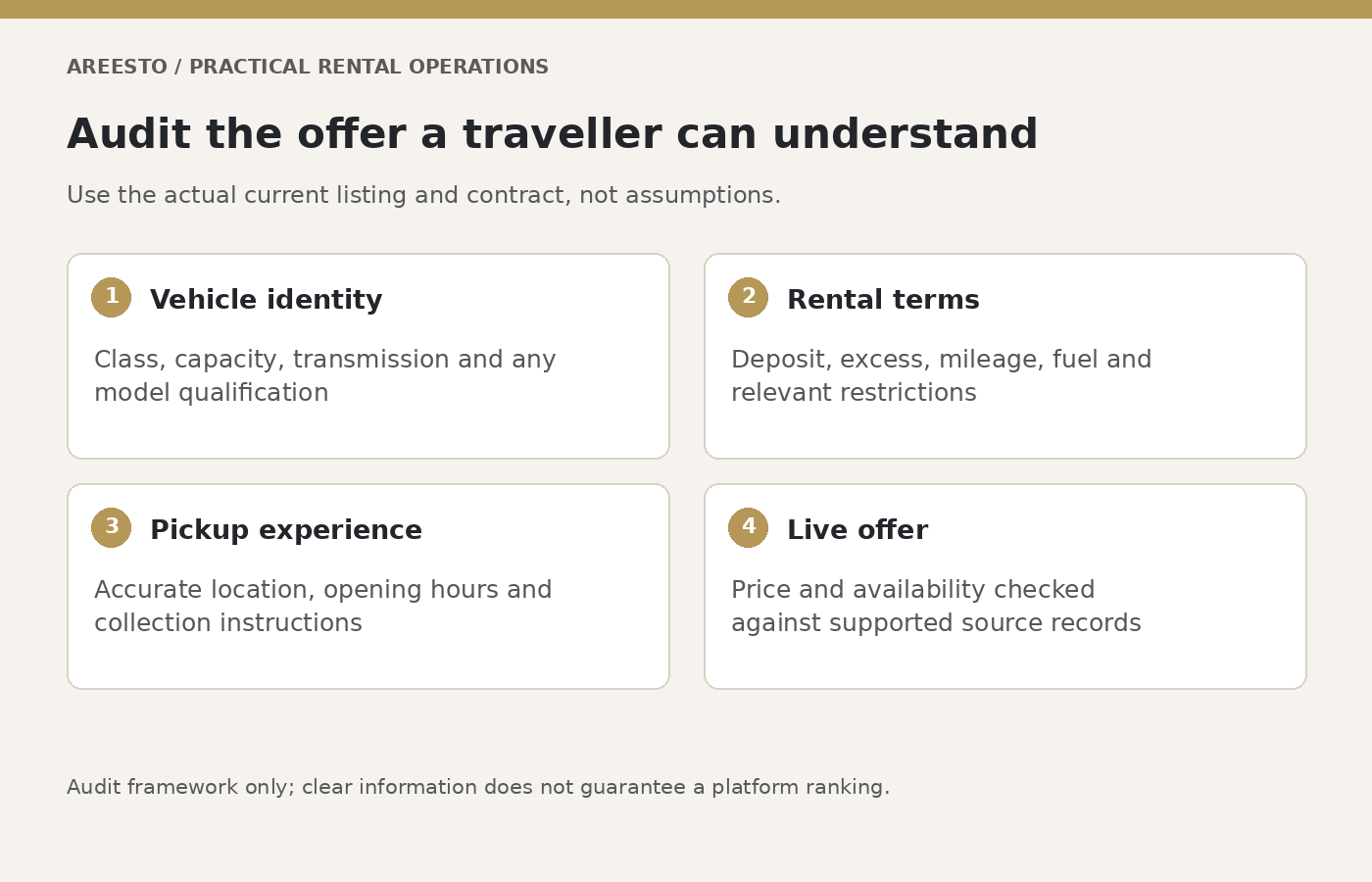
Make sure every vehicle is mapped to the right category and shown with a clear, accurate image. Explain whether the offer covers a vehicle class or a specifically guaranteed model; do not let an image imply a model guarantee the contract does not provide. Accuracy is marketing.
Terms that read like a promise, not a trap
Deposit, fuel policy, mileage limits, insurance excess, young driver rules, cross-border restrictions and pick-up instructions all appear in the fine print. Travellers have learned to read it. Clear, fair and consistent terms reduce hesitation, cancellations and disputes at the counter.
Pick-up experience details
“Meet and greet”, “shuttle from terminal” or “desk in arrivals hall” can matter as much as price, especially after a long flight. If your pick-up process is convenient, say so precisely. If it involves a shuttle, describe where to find it. Uncertainty is the enemy of conversion.
Reviews: Trust at the Point of Comparison
On most comparison platforms, ratings appear right next to your price. A strong score can justify a slightly higher rate; a weak score can make even a bargain look risky.
- Fix the moments that create bad reviews. Long queues, surprise charges and disputes over damage are classic triggers. Marketing cannot hide them, but operations can remove them.
- Set expectations at every step. Confirmation emails, pick-up instructions and a friendly handover reduce the gap between what was promised and what was delivered.
- Respond professionally where the platform allows it. A calm, helpful reply shows future customers how you treat people when something goes wrong.
Think of reviews as a long-term asset. Every rental is a chance to earn one more reason for the next traveller to choose you.
Pricing Discipline Across Channels
Travellers compare visible prices, but chasing the lowest rate everywhere is a fast way to erode margins. A healthier approach is to manage prices deliberately:
- Keep rates and availability in sync. Overbooking or showing cars you cannot deliver can damage customer trust and your reputation.
- Understand your real cost per booking. Each channel has its own commission or fee structure. Know what a booking actually earns you after costs, channel by channel.
- Respect your contracts. Your distribution agreement may include rules on rate parity or promotions. Read them carefully before running discounts on your own site.
- Use seasonality wisely. Demand in Dubai shifts with the tourist season, events and holidays. Adjust rates and minimum rental lengths with intent rather than reaction.
Using GDS to Reach Corporate and Agency Travellers
Corporate travellers and travel managers care about different things than leisure customers. They want reliability, clear invoicing, consistent policies and easy reporting. If you connect through a GDS, your rates, vehicle data and policies need to be accurate and up to date, because a travel agent may book you without ever visiting your website.
Practical steps include keeping location codes and opening hours correct, making sure vehicle classes are mapped properly, and preparing your team for corporate customers who may arrive with specific billing or insurance requirements. The smoother the experience, the more likely the same company books you again.
Don’t Let Aggregators Own Your Customer
Here is the uncomfortable part. A customer who books through an aggregator often remembers the platform, not you. If your whole business depends on third-party channels, you are renting your demand from someone else.
The answer is not to abandon aggregators. It is to turn each rental into a brand moment:
- Make the handover memorable. Clean cars, branded touchpoints and a friendly team leave an impression the platform cannot claim.
- Build a recognisable brand. A consistent name, visual identity and tone across your counter, cars, emails and website help customers remember you next time.
- Give a reason to book direct. Within the limits of your agreements, highlight what your own website offers, such as easier changes, loyalty perks or local support.
- Invest in your own channels. Search visibility, social media and a fast, mobile-friendly booking flow help you capture demand that already knows your name.
A specialised car rental marketing agency can help you balance this mix, to assess channel economics while improving how customers recognise your business.
Measuring What Matters
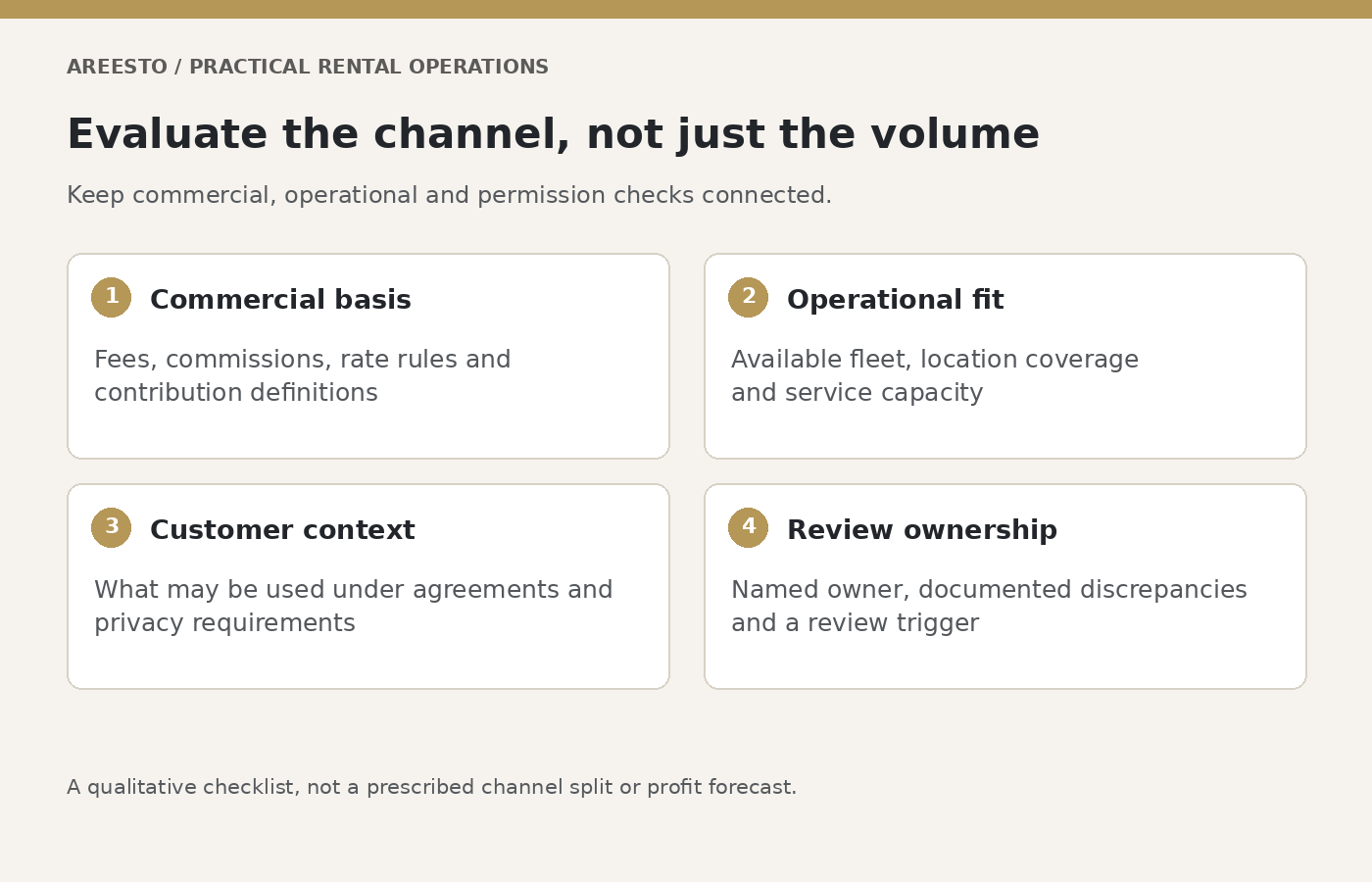
Aggregator dashboards show plenty of numbers. The useful question is simple: which channels bring profitable, low-hassle customers?
- Bookings and cancellations by channel
- Net revenue after commissions and fees
- Average rental length and vehicle category by channel
- Review scores and common complaints
- Share of repeat customers who later book direct
Look at these together, not in isolation. A channel with high volume but frequent disputes may be worth less than a smaller channel with loyal, easy customers.
Keep the Direct-Demand Foundation and Listing Review Connected
The original listing-health discipline still matters: assign a named owner to check the current vehicle classes, location details, prices, new reviews, cancellations and upcoming availability. Choose a review cadence that fits how often your fleet and offers change; no universal time limit guarantees a better ranking. Record the discrepancy and who will correct it.
Keep the physical handover part of this review. Check that staff can explain the deposit, current terms and pick-up instructions before the customer reaches the counter. Verify applicable driving-licence and documentation rules for the actual renter through appropriate current official guidance rather than copying an old nationality list into every offer.
When a traveller searches your company name, the website, branch details and support route should describe the same business. Keep Google Business Profile categories, locations and hours accurate under the platform’s current rules; do not presume every airport pickup arrangement qualifies for another profile. Relevant support includes local SEO services in Dubai and SEO for car rental companies, without a ranking guarantee.
Use actual recurring feedback to guide online reputation management in Dubai. Coordinate the rental listing with the wider automotive SEO, marketing and web design and SEO programme rather than making every channel an isolated project. The existing contact route remains office@areesto.com.
Do not treat a booking as unrestricted permission for retargeting or promotional email. Review the supplier agreement and the applicable privacy/consent basis for the actual use. A visit to your own website does not automatically grant unlimited tracking or marketing rights.
A Simple Action Plan
- Audit every listing for accurate photos, categories, terms and pick-up instructions.
- Identify the top causes of negative reviews and fix them at the counter.
- Connect rates and availability so every channel shows the truth.
- Calculate net profit per booking for each channel.
- Strengthen your brand at every physical and digital touchpoint.
- Build a direct booking path that gives returning customers a reason to come back.
If you want an outside view on how your listings, brand and direct channels work together, explore our car rental marketing services in Dubai.
FAQ
What is the difference between an aggregator and a GDS in car rental?
An aggregator or OTA shows many rental suppliers to consumers in one search, usually in exchange for a commission. A GDS is a distribution network that connects suppliers with travel agents and corporate booking tools, making it important for business travel.
How can I rank higher on comparison sites?
No single change guarantees a position. Check the platform’s current ranking explanation and improve accurate vehicle mapping, clear terms, sustainable pricing and reliable fulfilment. Do not assume every platform uses the same factors or that reviews alone determine placement.
Should a car rental company rely only on aggregators?
No. Aggregators bring reach, but relying on them alone can concentrate commercial and customer-relationship dependencies. A healthy mix can include direct bookings driven by a strong brand.
How do I encourage aggregator customers to book direct next time?
Deliver a memorable experience, keep your branding consistent and give returning customers a clear reason to use your own website, while respecting your distribution agreements. Our car rental marketing team can help plan this.
Is it allowed to contact aggregator customers directly for marketing?
Check your agreement and the applicable privacy and consent basis. Having information needed to fulfil a rental is not automatically permission to reuse it for unrelated promotion or retargeting.
What Google Business Profile category should a rental company use?
Choose the most specific eligible category describing the actual core business under Google’s current guidance. A car rental agency category may fit; check eligibility, actual branch details and any airport-location conditions rather than creating unsupported profiles.
Do I need a rental management system?
Not every fleet needs the same system. With multiple channels, assess whether your chosen tools can maintain accurate rates and availability, detect failures and support staff. Automatic synchronisation depends on supported connections and monitoring; it is not guaranteed by the software label.