
Bilingual Brand Identity in the UAE: How to Design an Arabic and English Logo, Type and Guidelines
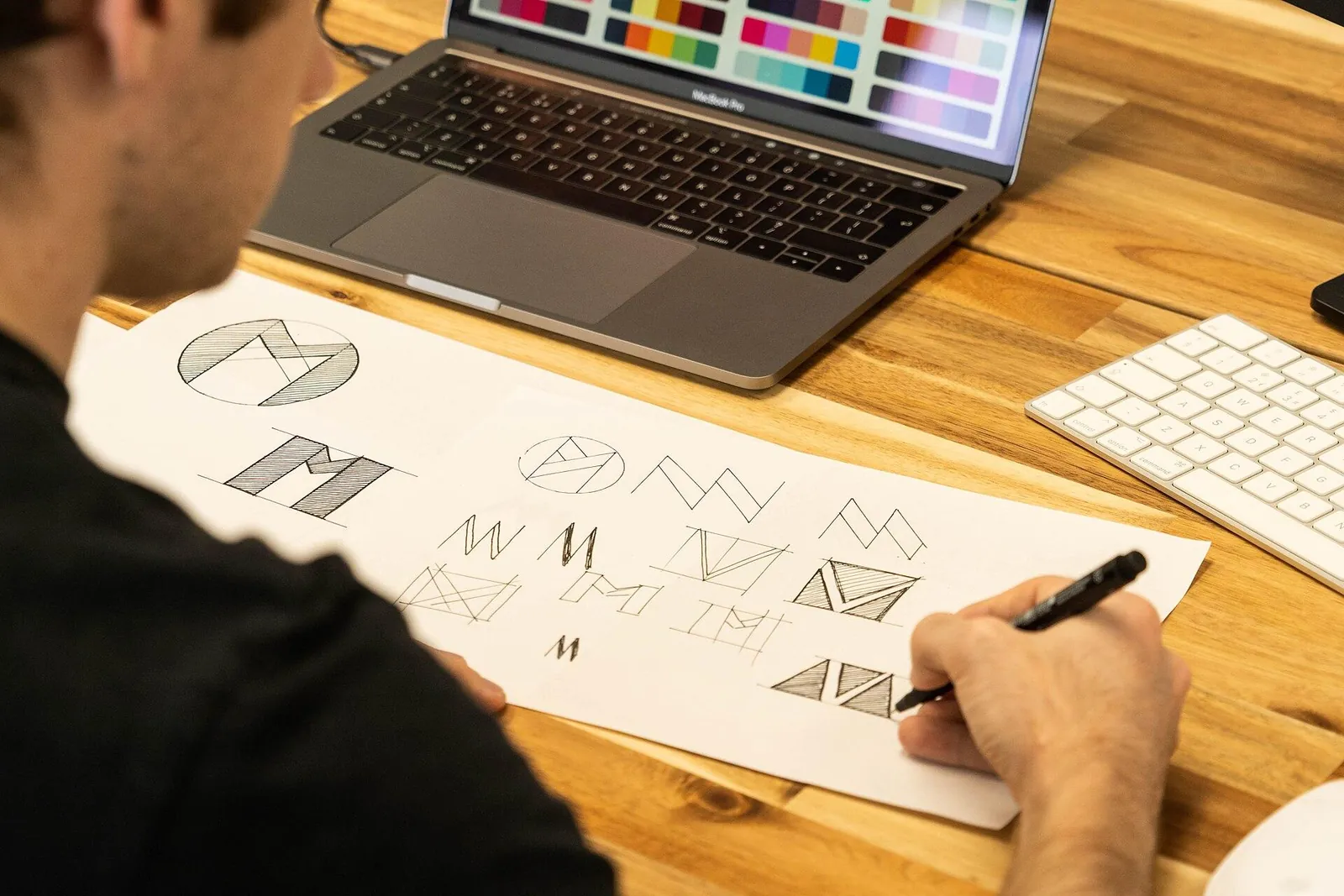
A bilingual brand identity in the UAE is a single visual and verbal system designed to work equally well in Arabic and English. It includes a logo with matched Arabic and Latin versions, paired typefaces, a shared colour palette, imagery rules, a tone of voice for each language and guidelines that show both scripts on real materials.
Most identities in Dubai are designed in English first, with Arabic added later by whoever is available. The result is often an Arabic version that looks borrowed. This guide explains how to plan both from day one. If you need the design done for you, see our brand identity design service in Dubai and design agency.
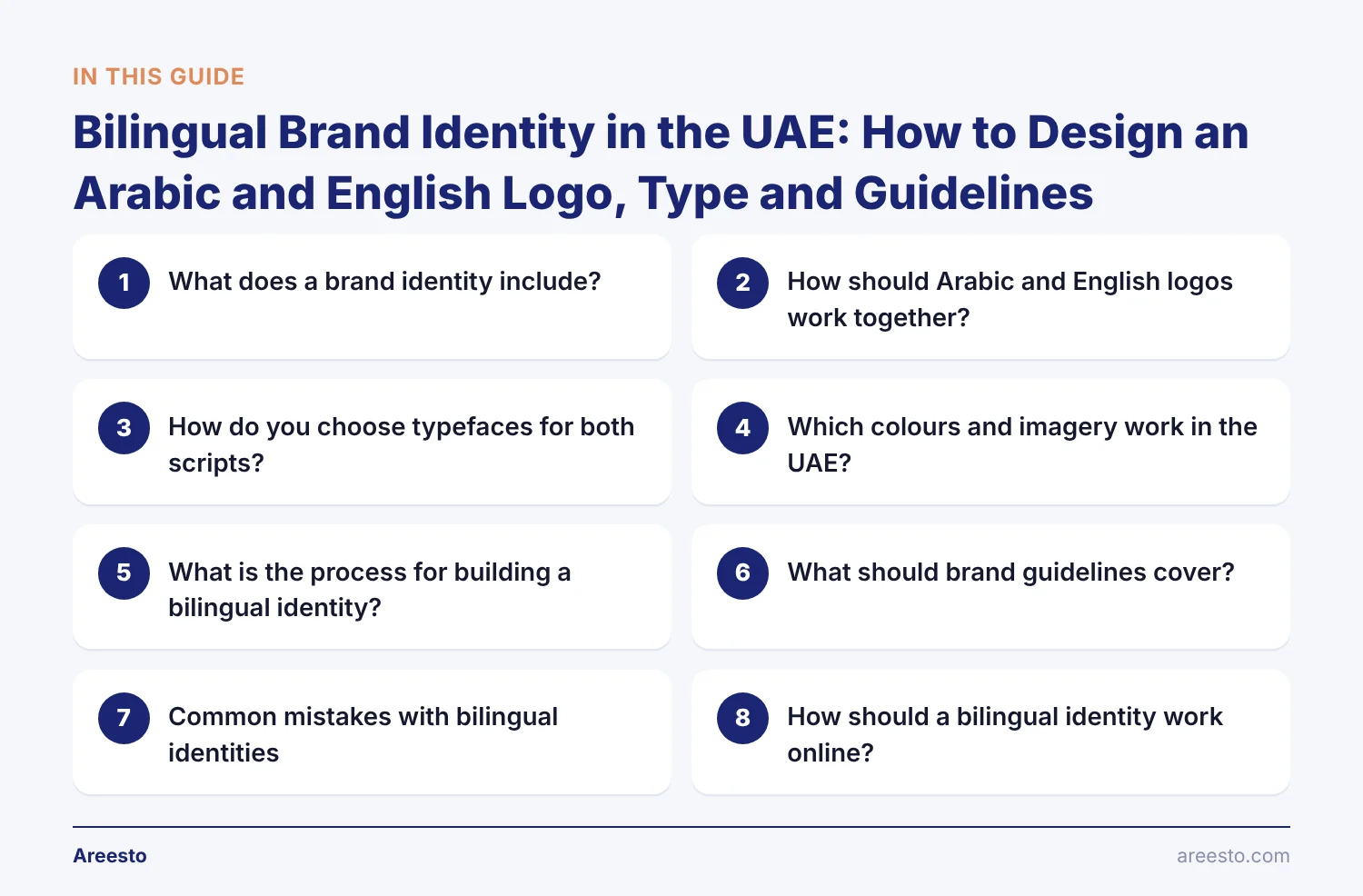
What does a brand identity include?
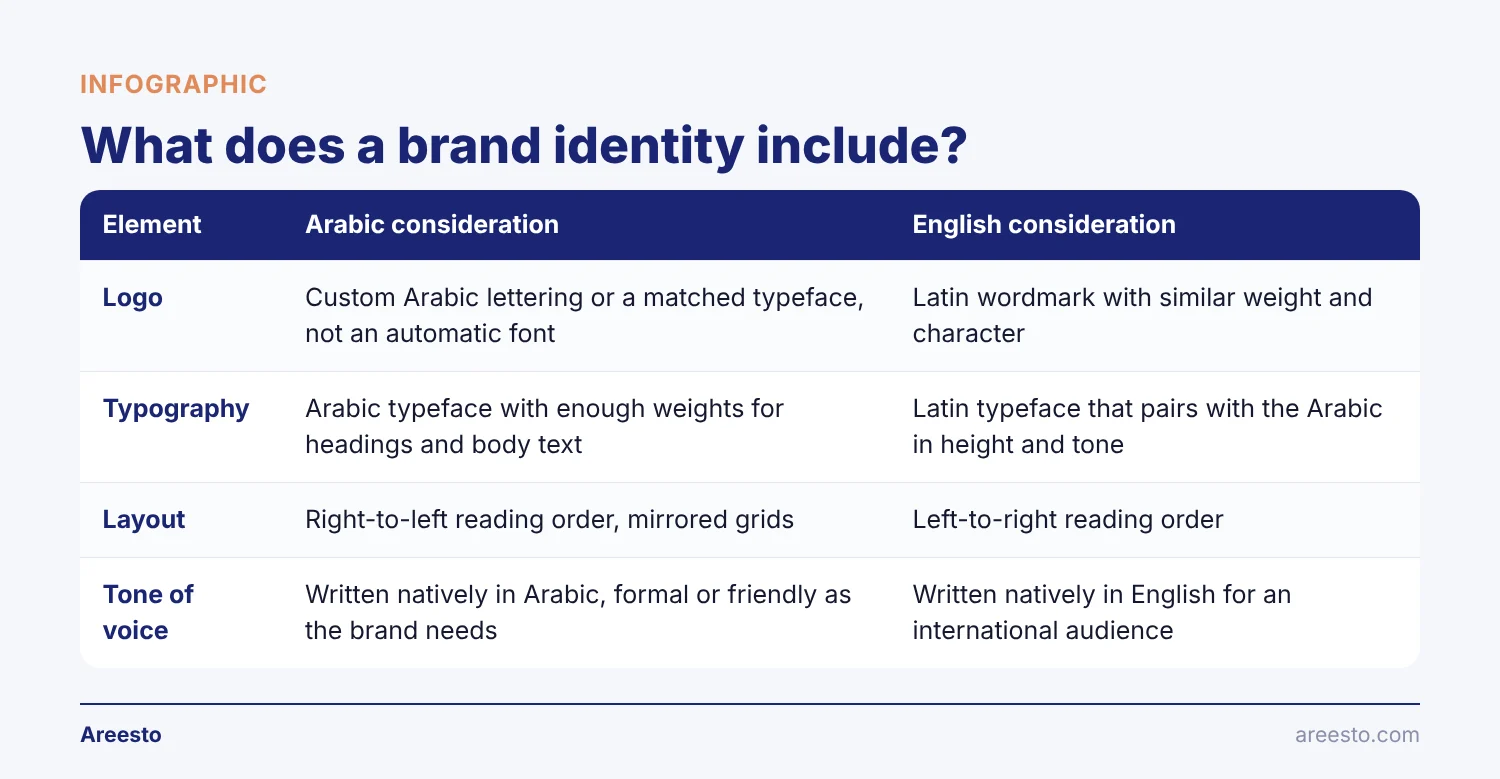
A complete brand identity includes the name and logo, colour palette, typography, imagery and illustration style, iconography, layout principles, tone of voice and a guidelines document. For UAE businesses, each of these needs an Arabic and an English expression that feel like the same brand.
| Element | Arabic consideration | English consideration |
|---|---|---|
| Logo | Custom Arabic lettering or a matched typeface, not an automatic font | Latin wordmark with similar weight and character |
| Typography | Arabic typeface with enough weights for headings and body text | Latin typeface that pairs with the Arabic in height and tone |
| Layout | Right-to-left reading order, mirrored grids | Left-to-right reading order |
| Tone of voice | Written natively in Arabic, formal or friendly as the brand needs | Written natively in English for an international audience |
How should Arabic and English logos work together?
The two versions should share proportion, stroke weight and personality, so they read as one mark. Design horizontal and stacked lock-ups, decide which language leads in each context, and test both at small sizes. Avoid stretching a Latin logo idea into Arabic letterforms that do not naturally behave that way.
Lock-ups to prepare
- Arabic and English side by side (for signage and websites).
- Arabic above English, and English above Arabic (for documents and packaging).
- Each language alone (for social profiles and audiences that use one language).
- A symbol or monogram for very small sizes.
How do you choose typefaces for both scripts?
Pick the Arabic typeface first or at the same time as the Latin one, because good Arabic families with several weights are fewer. Check that both have similar x-height and visual weight, that numerals are available in the style you need, and that licences cover web, print and app use.
Which colours and imagery work in the UAE?
origial uploader: Céréales Killer
derivative work: MagentaGreen, CC BY-SA 3.0, via Wikimedia Commons
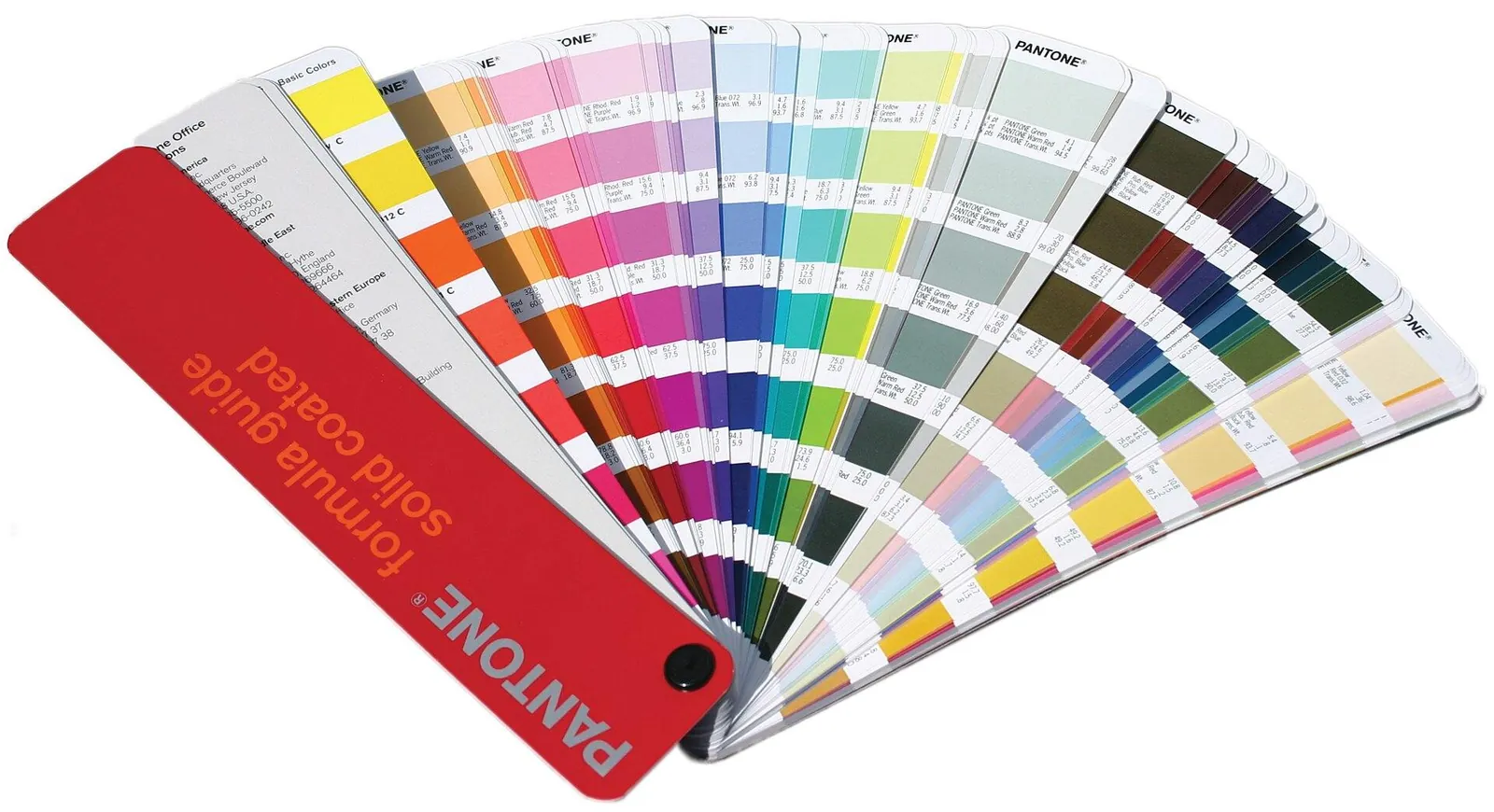
There is no single “UAE colour”. Choose colours that support your positioning and test them in strong sunlight, on screens and on printed materials. For imagery, show real settings and people your customers recognise, and agree rules for photography that respect local norms. Keep the palette small enough to stay consistent.
What is the process for building a bilingual identity?
- Brief: confirm the brand strategy, positioning and audiences for each language.
- Research: review competitors and how they use Arabic and English.
- Concepts: develop two or three routes, each shown in both scripts.
- Refinement: adjust details with a native Arabic designer or calligrapher involved.
- Real-world testing: apply to signage, website, social posts, invoices and packaging.
- Guidelines: document rules with examples in both languages.
If you have not defined your positioning yet, read brand strategy vs brand identity vs positioning first.
What should brand guidelines cover?
Guidelines should show logo use and clear space, colour codes for print and screen, type hierarchy in Arabic and English, mirrored layout examples, photography rules, tone of voice with sample sentences in each language, and templates for the items you use most. Keep them short enough that suppliers actually open them.
Common mistakes with bilingual identities
- Machine translation of taglines and signage.
- Default system fonts for Arabic next to a custom English wordmark.
- Mirroring everything, including elements such as icons with arrows or logos that should not flip.
- No Arabic proofreading before printing.
Also plan where the identity will appear: shopfront signage, vehicles and advertising usually need approval from the relevant local authority, so check requirements before production. Our packaging design team can extend the system to products.
How should a bilingual identity work online?
Online, the identity must switch cleanly between Arabic and English pages. Plan a right-to-left version of your website layout, choose web fonts for both scripts, and make sure buttons, icons and forms are mirrored where needed. Social media templates should exist in both languages, with text areas sized for Arabic, which can run longer or shorter than English depending on the phrase.
- Website: separate Arabic and English templates, not automatic translation.
- Social media: templates and caption tone for each language.
- WhatsApp Business: profile, greeting and quick replies in both languages.
- Email signatures and documents: consistent bilingual layouts.
How do you keep the identity consistent as you grow?
Appoint one person to approve brand use, keep master files in a shared folder, and give printers, freelancers and agencies the same guidelines and templates. Review materials every few months. Small drifts, such as a slightly different colour on a new sign or an unofficial Arabic font in a social post, add up quickly in a busy market like Dubai, where customers see your brand next to many polished competitors.
When your offer changes, revisit the strategy before you change the identity. See brand development for how we handle growth stages.
A practical checklist before you sign off a bilingual identity
Before approving the final identity, test it in the places customers will actually see it. Many problems only appear once Arabic and English sit side by side in real layouts.
- Print the logo lockups at business-card size and on a shop sign mock-up; check that the Arabic is still legible when small.
- Set a real paragraph in both languages and confirm that the line spacing, weights and sizes feel balanced.
- Build one social post and one website section in Arabic (right to left) and English (left to right) using the same grid.
- Check numbers, dates and prices in both scripts, and decide whether you will use Western or Arabic-Indic numerals.
- Ask native Arabic speakers from your target audience to read headlines aloud; awkward literal translations show up quickly.
- Confirm font licences cover web, app and print use in both scripts.
How do you brief a designer for a bilingual identity?
Give the designer the brand strategy, the list of touchpoints and a clear rule on which language leads where. For example, a government-facing service may lead with Arabic on signage, while a tech start-up may lead with English online but still need full Arabic versions. Share examples of Arabic lettering you like and dislike, and ask to see both scripts at every review, not only the English version. A {L()} that works in both languages every day should be able to show past bilingual work and explain how it was tested.
Key takeaways
- Design Arabic and English together, not one after the other.
- Match weight, proportion and tone across scripts.
- Test on real materials and document clear bilingual guidelines.
Talk to a Dubai branding team
If you want a second opinion on where your brand stands, book a free consultation or message us on WhatsApp. We will look at what you have today and tell you plainly what to fix first.
Frequently asked questions
Do I need an Arabic logo for my business in Dubai?
Many businesses benefit from one, especially if they serve Arabic-speaking customers or need Arabic on signage. Check signage requirements with the relevant authority for your location before you produce anything.
Can I translate my English logo into Arabic?
You can adapt it, but a direct letter-by-letter conversion rarely works. Arabic letterforms behave differently, so the Arabic version should be designed to match the feel of the English one.
Which language should come first on signage?
It depends on your audience and any local signage rules. Many UAE brands give Arabic prominence; confirm the requirements for your emirate and location.
How many typefaces does a bilingual brand need?
Usually one Arabic family and one Latin family, each with a few weights. More than that tends to make materials inconsistent.
What files should I receive at the end of an identity project?
Logo files in all lock-ups and colour versions, colour codes, font details and licences, templates and a guidelines document showing Arabic and English use.
Should the Arabic name be a translation or a transliteration?
It depends on the name. Descriptive names often translate well, while invented names usually work better transliterated. Test both versions with Arabic-speaking customers before deciding.
Do I need separate Arabic and English social media accounts?
Not always. Many UAE brands use one account with bilingual posts or alternating languages. Separate accounts make sense when the audiences and content are very different.