
Brand Strategy vs Brand Identity vs Brand Positioning: What a Dubai Business Needs First

Brand strategy is the plan for how your business will win: who you serve, what you promise and why people should believe you. Brand positioning is the part of that plan that defines the space you own in the customer’s mind against competitors. Brand identity is how the strategy looks, sounds and feels: name, logo, colours, type and tone. In that order.
Many Dubai businesses start with a logo because it is the visible part. This guide explains the three layers, how they connect and when each one is worth paying for. For the full service, see our brand strategy in Dubai, brand positioning and brand identity design pages.
What is brand strategy?
Brand strategy is the long-term decision about who your brand is for, what it stands for and how it will grow. It covers your audience, your promise, your proof points, your personality and your brand architecture. It is written down so that marketing, sales and design teams make the same choices without asking each time.
A useful brand strategy document usually answers:
- Audience: which customers matter most, in which emirates and in which languages.
- Promise: the one benefit you want to be known for.
- Proof: the facts, processes or credentials that make the promise believable.
- Personality and tone: how the brand speaks in English and Arabic.
- Architecture: how the company brand, sub-brands and products relate.
What is brand positioning?
Brand positioning is the specific place you choose to occupy compared with alternatives. It is narrower than strategy: one or two sentences that say for whom you are the best choice and why. A clear position makes pricing, messaging and design decisions easier, because anything that does not support it can be dropped.
In Dubai, positioning matters more than in many markets because buyers compare local, regional and international providers side by side. A clinic, a law firm or a restaurant group competes with dozens of polished brands within a few kilometres. Being slightly better at everything rarely works; being clearly the best at one thing for one group usually does.
A simple positioning statement
For [audience] who [need], [brand] is the [category] that [main benefit], because [proof]. Write it in English and Arabic and check that both versions say the same thing, not just a translation of the words.
What is brand identity?
Brand identity is the visible and audible system that expresses the strategy: name, logo, colour palette, typography, imagery style, iconography, tone of voice and the rules for using them. In the UAE it should work in both Arabic and English, on screens and signage, and in small sizes such as app icons and social avatars.
How do the three fit together?
| Layer | Question it answers | Typical output |
|---|---|---|
| Brand strategy | Who are we for and how will we win? | Strategy document, audience profiles, brand architecture |
| Brand positioning | Why choose us over the alternatives? | Positioning statement, value proposition, key messages |
| Brand identity | How do we look and sound? | Logo, colours, type, imagery, tone of voice, brand guidelines |
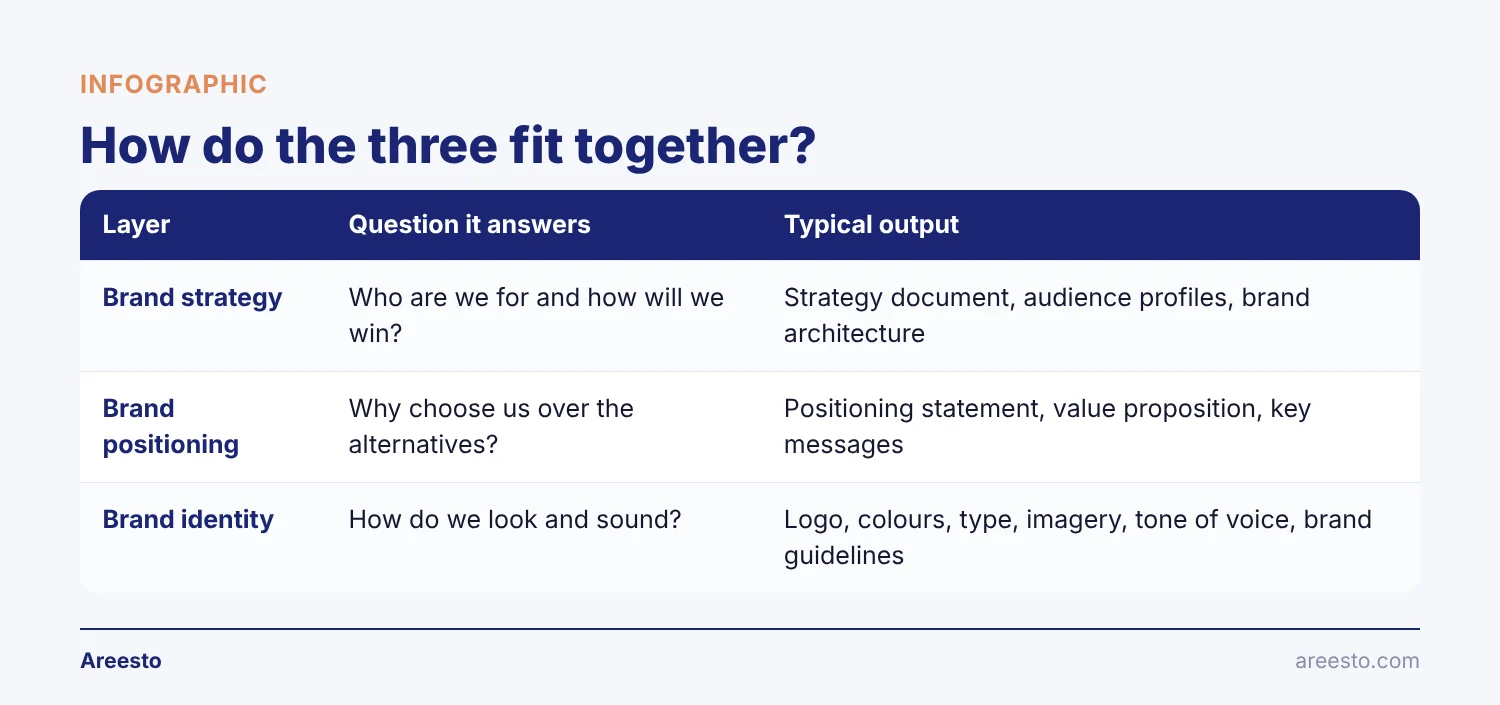
Strategy comes first because it gives the designer a brief. Positioning sharpens the brief. Identity then turns it into assets people can recognise. When the order is reversed, businesses often redesign their logo twice: once because it looked good, and again when they realise it does not say anything about why they are different.
Which one should you start with?
Start with strategy and positioning if you are launching, entering the UAE from abroad, merging businesses or competing on price because customers cannot tell you apart. Start with identity only if your strategy is already clear and documented and the problem is purely visual, such as an outdated logo or inconsistent materials.
- New business or market entry: strategy, positioning, then identity.
- Growing business with an unclear message: positioning workshop, then a light identity refresh.
- Clear strategy, tired visuals: identity refresh and updated guidelines.
- Merger or new sub-brand: brand architecture first, then identity for the new structure.
What does each stage involve in practice?
Strategy and positioning
Expect interviews with founders and staff, a review of competitors in your emirate and sector, conversations with a few real customers, and one or two workshops. The result should fit on a few pages that your team will actually read.
Identity
Expect concept routes, refinement, testing in real use (signage, social posts, invoices, Arabic and English layouts) and a guidelines file. Ask to see the identity on your own materials, not only on mock-ups.
Common mistakes we see in Dubai
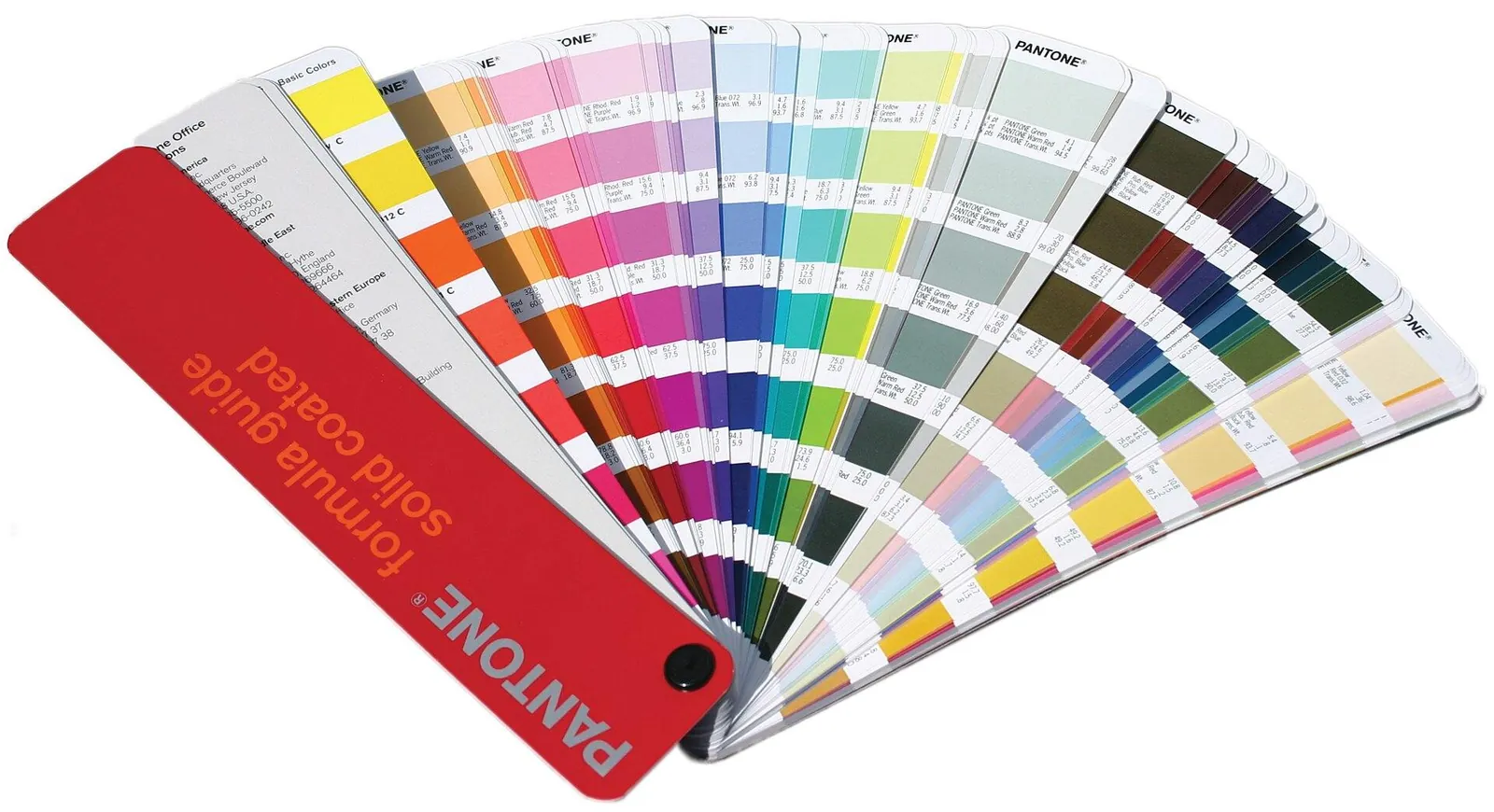
origial uploader: Céréales Killer
derivative work: MagentaGreen, CC BY-SA 3.0, via Wikimedia Commons
- Copying an international competitor. It looks premium but gives customers no reason to choose you.
- Translating instead of adapting. An English slogan translated word for word into Arabic often sounds unnatural.
- Positioning for everyone. “Quality, trust and innovation” could describe any company.
- No guidelines. Without rules, the identity drifts within months as different freelancers and printers use it.
If budget is the question, our guide to brand strategy cost in Dubai explains what drives the price.
How do you know your brand strategy is working?
A working brand strategy shows up in everyday decisions. Sales conversations get shorter because prospects already understand what you do. Staff describe the business in similar words. Designers and agencies need fewer rounds of feedback because the brief is clear. Customers mention the same reasons for choosing you that the strategy intended.
- Message consistency: your website, proposals and social posts say the same thing.
- Fewer price-only conversations: buyers compare you on value, not only cost.
- Better-fit enquiries: more leads match the audience you defined.
- Faster decisions: new campaigns and products are easier to brief.
Who should be involved?
Include the founder or managing director, the people who sell, and the people who deliver the service. In family businesses and groups common in the UAE, also involve the owners who approve final decisions early, so the strategy is not reopened after design has started. An outside facilitator helps keep workshops focused and challenges assumptions that insiders no longer notice.
Finally, treat the strategy as a working document. Review it once a year or when the business changes, such as opening in another emirate or adding a new service line, and update the identity only when the strategy genuinely changes.
What does a good brand strategy brief look like?
A brand strategy brief is a short document that tells everyone involved what the brand must achieve. It should fit on two or three pages and be specific enough that a designer, copywriter or media agency could act on it without guessing.
- Business goal: what the brand must help the company do in the next two to three years, such as enter Saudi Arabia, win government tenders or raise prices.
- Audience: the main buyer groups, written in plain language, including which ones need Arabic, English or both.
- Competitors: the five to ten brands your customers actually compare you with, in Dubai and online.
- Positioning statement: one sentence on who you serve, what you offer and why you are the better choice.
- Personality and tone: three to five traits, with examples of what the brand would and would not say.
- Constraints: licensing names, parent-company rules, budgets and deadlines.
When you brief a {L()}, a clear document like this shortens the project and makes it much easier to judge the creative work against agreed criteria rather than personal taste.
Key takeaways
- Strategy is the plan, positioning is the choice that sets you apart, identity is the expression.
- Do them in that order to avoid paying for design twice.
- In the UAE, build every layer for Arabic and English from the start.
Talk to a Dubai branding team
If you want a second opinion on where your brand stands, book a free consultation or message us on WhatsApp. We will look at what you have today and tell you plainly what to fix first.
Frequently asked questions
Is brand positioning part of brand strategy?
Yes. Positioning is one part of brand strategy. Strategy also covers audience, promise, proof, personality and brand architecture, while positioning focuses on how you differ from competitors.
Can I design a logo before I have a brand strategy?
You can, but it is risky. Without a clear strategy the designer guesses what the logo should express, and many businesses end up redesigning once their positioning becomes clear.
How long does a brand strategy take?
It depends on the size of the business and how many people need to be involved. A small business can often complete strategy and positioning in a few weeks; larger organisations take longer because of research and approvals.
Do I need a separate Arabic brand strategy?
Usually not a separate strategy, but your positioning, key messages and tone of voice should be written and tested in Arabic as well as English, not simply translated.
What is the difference between brand identity and brand image?
Brand identity is what you design and control. Brand image is how customers actually perceive you. A good strategy and consistent identity help close the gap between the two.
Can a small Dubai business skip brand strategy?
It can shorten it, but not skip it. Even a one-day workshop that agrees audience, positioning and tone will make the logo, website and marketing decisions faster and more consistent.