
Brand Positioning for Real Estate in Dubai: Why Every Tower Needs a Reason to Exist
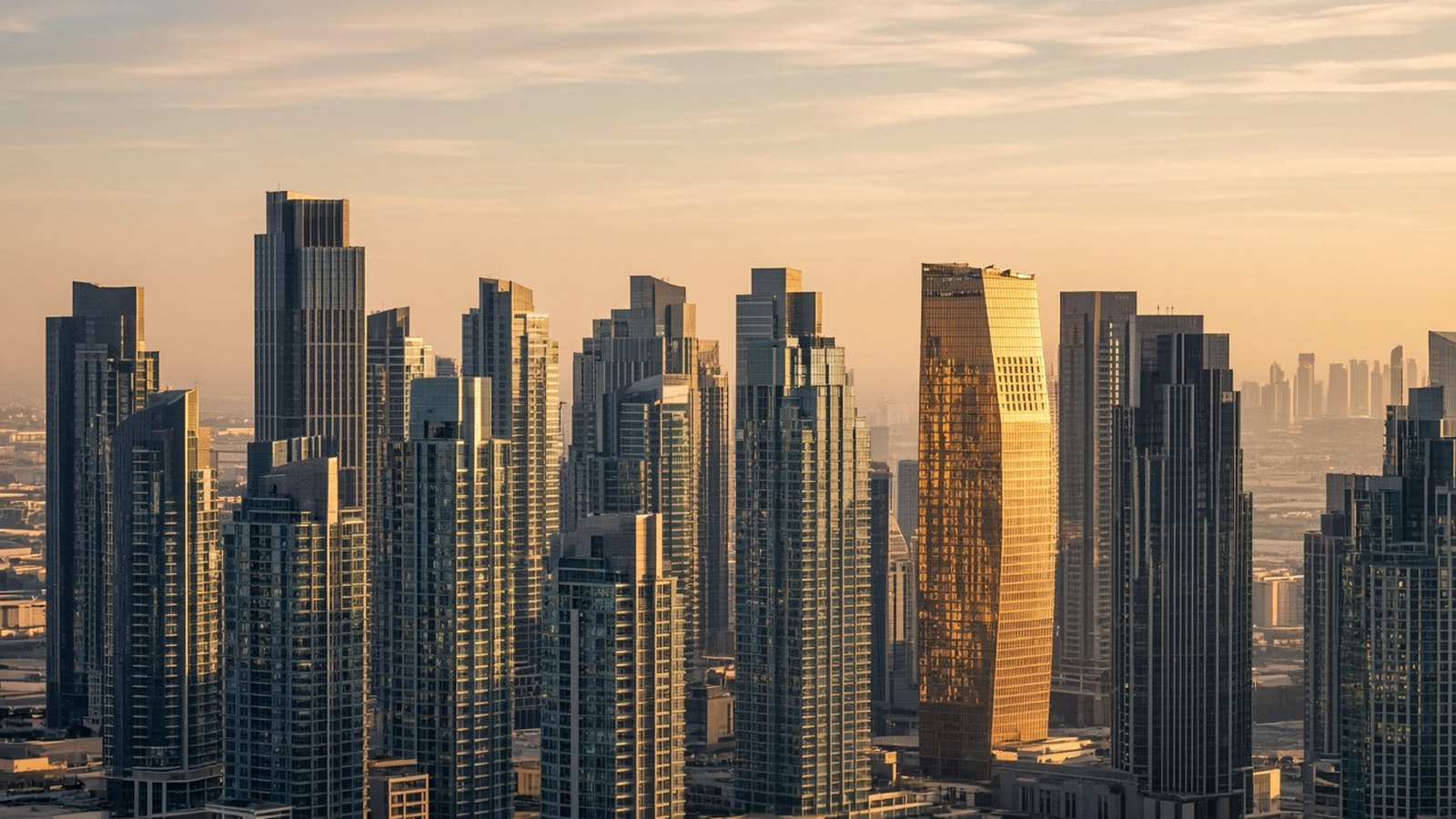
Stand on any rooftop in Dubai at sunset and count the cranes. Each one is lifting a promise into the sky: panoramic views, resort-style living, world-class amenities, an address that says you have arrived. Now open the brochures for those same towers. The renders glow in the same gold light, the infinity pools stretch toward the same horizon, and the taglines blur into one long sentence about luxury. Buyers notice. When everything sounds the same, they fall back on the only thing left to compare: price per square foot.
That is exactly what real estate branding is meant to prevent. Strong real estate brand positioning in Dubai gives a project a reason to exist, a single idea that a buyer can repeat to their partner over dinner. In this guide we look at how developers, communities and brokerages can find that idea, and how it connects to the wider discipline of strategic brand positioning for Dubai companies.
The “Skyline Sameness” Problem: Why Renders, Views and “Luxury Living” No Longer Differentiate
Renders were once a competitive advantage. Today every launch has them, and they are often produced by the same visualisation studios using the same lighting presets. Views are similar: a sea view in one tower is a sea view in the next. And “luxury” has been used so often that it has become a category description rather than a promise.
The result is a market where buyers scroll through dozens of listings and feel nothing. Positioning breaks that pattern by choosing what your project stands for and, just as importantly, what it does not. A tower that is “the quiet one for families who work from home” is easier to remember than one more address offering “a lifestyle beyond compare”.
Three Levels to Position: the Developer, the Community and the Individual Tower
Real estate brands live on several levels at once, and confusion between them is one of the most common causes of weak marketing.
Master Brand vs Project Brand: When to Separate Them
The developer’s master brand carries trust: delivery record, build quality, after-sales care. A project brand carries desire: a lifestyle, a mood, a specific buyer. Keep them close when the developer’s name is itself the strongest selling point. Separate them when a project targets a very different audience, for example a playful, design-led building from a developer known for conservative family communities. The master brand then acts as an endorsement, a quiet signature at the bottom of the page.
Agencies and Brokerages: Positioning a Service, Not a Building
A brokerage does not sell one tower; it sells judgement, access and peace of mind. Its position might be deep knowledge of a few neighbourhoods, a specialism in first-time investors, or an unusually transparent advisory style. Whatever it is, it should be visible in how agents talk, how listings are written and how quickly the team replies on WhatsApp.
Choosing Your Buyer Before Your Tagline
Before anyone writes a headline, decide who the project is really for. End-user families care about schools, parks, storage and the walk to the mosque or the nursery. Investors look at rental demand, service charges and exit options. Overseas buyers need reassurance about process, payment plans and who will manage the unit when they are not in the country.
Trying to speak to all three in one brochure produces copy that convinces none of them. Pick a primary buyer, design the story for them, and let secondary audiences find what they need in supporting material. For premium projects, our thinking on luxury real estate in Dubai goes deeper into how high-end buyers decide.
Finding the Ownable Idea: Location Story, Lifestyle, Design Philosophy or Trust
Most strong real estate positions grow from one of four roots:
- Location story: not just “near the metro” but what the neighbourhood means, its history, its rhythm, its future.
- Lifestyle: a clear way of living, such as wellness, creative work, car culture or multigenerational family life.
- Design philosophy: an architectural idea strong enough to shape everything from the lobby scent to the font on the hoarding.
- Trust: for developers and brokers alike, a reputation for doing exactly what was promised, on time.
Test each candidate idea with a simple question: could a competitor down the road say the same thing with a straight face? If yes, keep digging.
World Brands: What We Can Learn From Real Estate Positioning Leaders
Some of the clearest lessons come from brands that have held a position for a long time. These are public examples only, and Areesto has no relationship with them.
Emaar: The Master-Planned Destination
Emaar is widely associated with large master-planned destinations built around an iconic centrepiece, with Downtown Dubai as the best-known example. The lesson is that the community and its landmark become the brand, so every individual tower borrows meaning from a bigger story.
Aldar: Communities With a Distinct Sense of Place
In Abu Dhabi, Aldar is known for shaping destinations such as Yas Island and Saadiyat Island, each with its own character, from leisure and entertainment to culture and beaches. The takeaway: give each destination a personality of its own instead of repeating one formula.
Four Seasons: Service as the Selling Point
Four Seasons is known for a hospitality brand built on consistent, personal service. Its branded residences carry that same promise into homeownership. For developers, the lesson is that a position can be a feeling of being looked after, not only a view.
Turning the Position Into a Launch: Naming, Sales Gallery, Brochure, Website, Listings
A position that lives only in a strategy deck is wasted. Bring it into every touchpoint:
- Naming: a project name that hints at the idea. Our brand naming process starts with positioning for this reason.
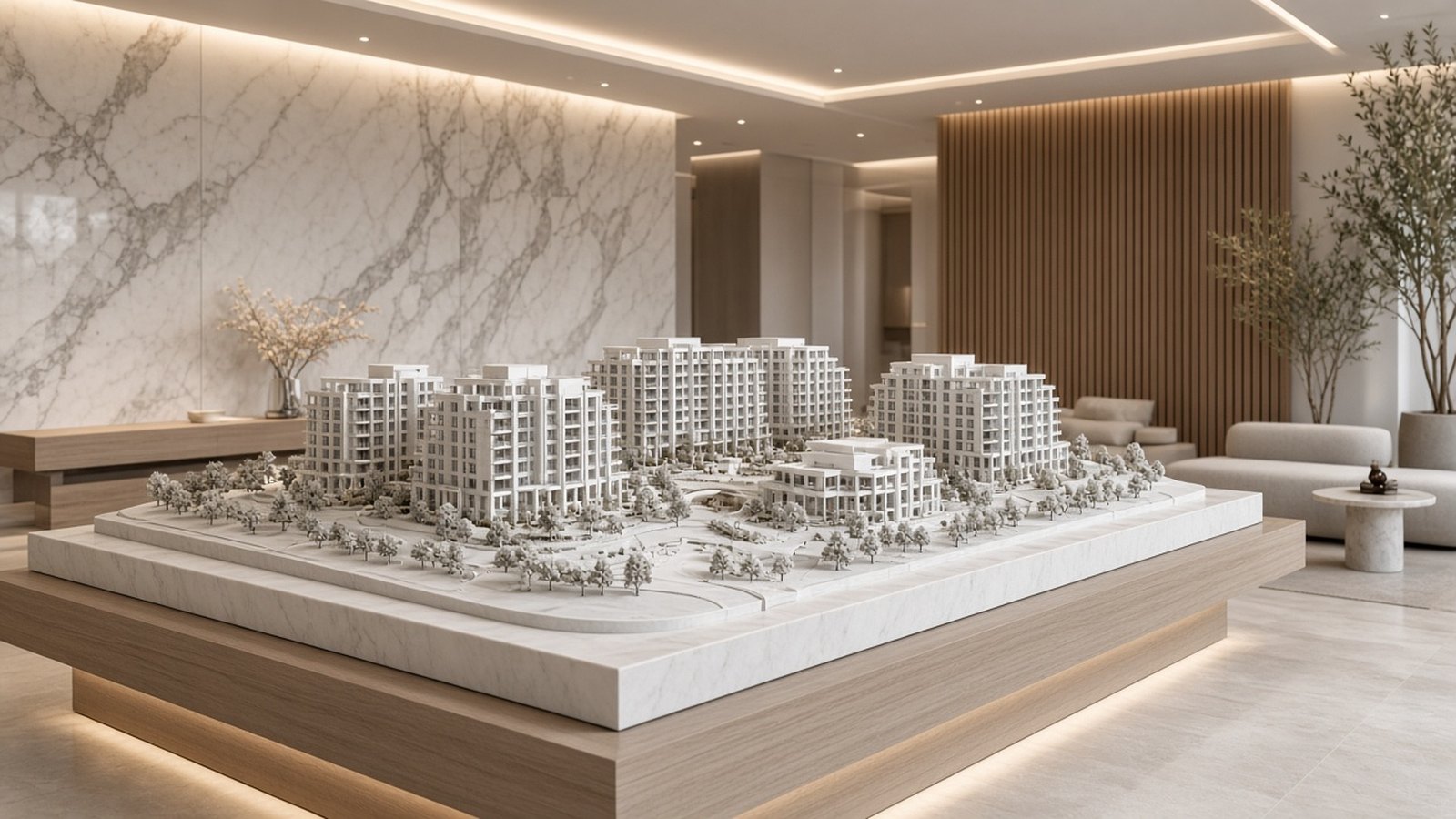
- Sales gallery: materials, lighting, music and even the welcome drink should feel like the promise.
- Brochure and website: lead with the idea, then prove it with floor plans, amenities and location facts.
- Listings: portal descriptions written for the chosen buyer, not copied from a generic template.
For offices, retail podiums and mixed-use schemes, the same logic applies with a business audience; see our page on commercial real estate marketing in Dubai.
Positioning Mistakes in Off-Plan Marketing
- Leading with payment plans instead of a reason to care.
- Changing the creative concept every few weeks because one campaign underperformed.
- Using stock lifestyle imagery that could belong to any project in any city.
- Promising amenities and timelines the sales team cannot confidently defend.
- Treating Arabic and English materials as translations rather than adaptations.
Frequently Asked Questions
Do individual towers need their own positioning?
Not always. In a tightly themed community, towers can share one position with small variations. When a tower targets a different buyer or price point, it deserves its own idea that still sits comfortably under the community and developer brand.
How does positioning differ for off-plan and ready property?
Off-plan sells a future, so positioning leans on vision, trust in the developer and the lifestyle story. Ready property can be visited, so positioning is proven on site through finishes, service and the living community around it.
Can a brokerage position itself against bigger agencies?
Yes. Smaller brokerages often win by being narrower: a few neighbourhoods known deeply, a specific buyer type, or a more personal advisory style that larger firms find hard to match.
When should a developer reposition?
Consider it when your brand no longer matches the projects you build, when you enter a new segment, or when buyers describe you in ways that do not reflect your ambitions. A structured audit helps decide whether you need a refresh or a full rebrand.
How long does it take to define a project’s position?
It depends on the project and the research involved. What matters most is that the position is agreed before naming, design and launch materials begin, so everything is built on the same idea.
Ready to Give Your Project a Reason to Exist?
Areesto is a branding, web design, SEO and marketing agency with offices in Dubai and Tehran. If you are preparing a launch or rethinking a brokerage brand, tell us about it at office@areesto.com and we will help you find the idea your buyers will remember.