
Arabic or English Marketing? Mastering Your Marketing Message for Dubai’s Diverse Audience
Arabic or English Marketing? Mastering Your Marketing Message for Dubai’s Diverse Audience
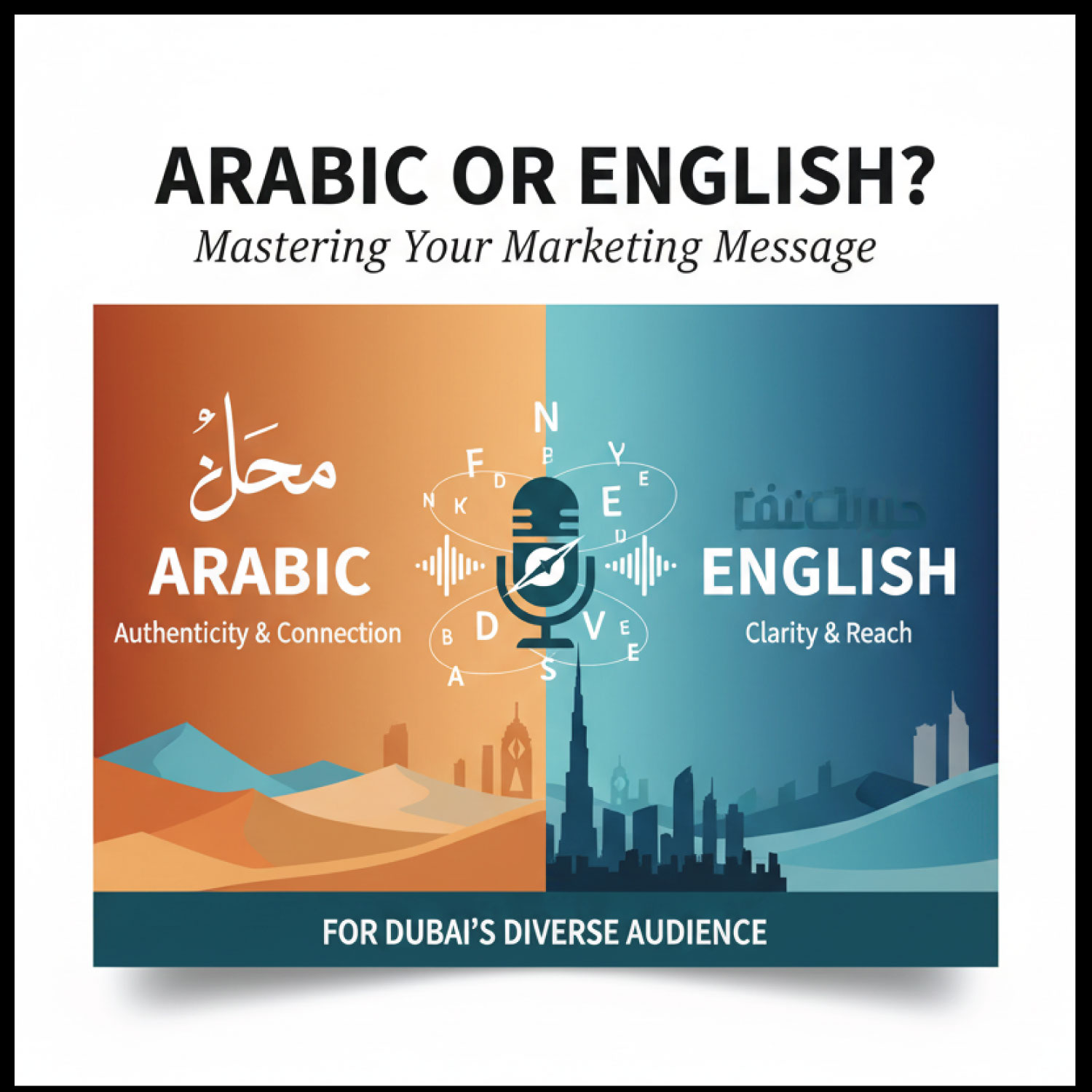
In a city where over 200 nationalities coexist, a simple question plagues every business: should my marketing be in Arabic, English, or both? The answer is not just a matter of translation; it’s a strategic decision that can make or break your brand’s success.
To truly master your message in Dubai, you must go beyond a simple dual-language approach. You need to understand who you’re talking to, where you’re talking to them, and how your message resonates on a cultural level. This requires a deep dive into market research and the guidance of local experts.
The Problem with a One-Size-Fits-All Approach
A common mistake is to create a single marketing campaign and simply translate the text from English to Arabic (or vice-versa). This can lead to disastrous results for two main reasons:
- Lost in Translation: A literal translation can be clunky, impersonal, or even offensive. Idioms, slang, and cultural references rarely translate well, and a message that sounds powerful in one language can feel tone-deaf in another.
- Cultural Disconnect: The audience for an Arabic ad is often different from the audience for an English ad. Targeting a campaign to a specific nationality or cultural group with a message that was not originally designed for them can feel inauthentic and may not resonate.
To avoid these pitfalls, your marketing strategy must be built on a foundation of data and local expertise.
Step 1: Market Research — Your Compass in the Cultural Desert
Before you write a single word of copy, you need to understand your audience’s linguistic and cultural preferences. In a market as diverse as Dubai, you must segment your audience beyond basic demographics.
Primary Research:
Go straight to the source. Conduct multilingual surveys and focus groups in both English and Arabic to gather direct feedback. Ask about language preferences for specific products or services. For example, a campaign for a luxury car might resonate better in English, while a campaign for a family-focused product might perform better in Arabic.
Secondary Research:
Analyze existing data. Study reports on consumer behavior in the UAE. Look at your competitors’ strategies—are they running bilingual campaigns? What platforms are they using for different languages? Data analytics from your website and social media can also provide clues on which language your audience is using to interact with your brand.
Social Listening:
Use tools to monitor conversations about your brand, industry, and competitors across social media platforms. Pay attention to the language used by different communities in Dubai. This real-time insight can highlight cultural trends and linguistic nuances that you may have missed.
Step 2: The Role of the Expert
While data is crucial, it’s not enough on its own. It’s how you interpret that data that makes the difference. This is where a bilingual, bicultural expert becomes invaluable.
Transcreation, Not Translation:
A skilled marketing professional understands the difference between simply translating words and “transcreating” a message. Transcreation is the process of adapting a message to a new language and culture while maintaining its original intent, style, and tone. For example, adapting a tagline to feel equally aspirational and authentic in both Arabic and English.
Cultural Sensitivity and Localization:
An expert with deep knowledge of the local culture can help you avoid costly mistakes. They can advise on which imagery is appropriate, what topics to avoid (e.g., overtly political or religious messages), and how to communicate respectfully during significant cultural moments like Ramadan. They also understand the nuances of a right-to-left design for Arabic content, which is critical for user experience.
Platform-Specific Strategy:
The most effective marketing strategy in Dubai is often platform-specific. An expert will know that while English may perform better on platforms like LinkedIn (for B2B), Arabic often dominates on platforms like Snapchat, especially when targeting local audiences. They can help you allocate your resources to the right channels for the right language.
A Hybrid Approach: The Gold Standard
For most businesses in Dubai, the answer isn’t “Arabic or English,” but “Arabic and English, strategically.”
Bilingual Brand Identity:
Your core brand messaging and visual identity should be strong enough to be presented in both languages without losing their essence.
Targeted Campaigns:
Use your research to create targeted campaigns. Run your English ads on platforms where expats and international visitors are most active, and your Arabic ads on channels and during times when they will resonate most with a local or Arab-speaking audience.
Content Localization:
Create separate content streams for each language. Your English content can focus on a global-minded perspective, while your Arabic content can include local stories, insights, and culturally relevant promotions.
By investing in market research and partnering with experts who understand Dubai’s multicultural fabric, you can ensure that your marketing message not only gets heard but truly connects, fostering trust and loyalty in a city that values respect and authenticity above all else.
Related service: Arabic marketing localization